We have been hard at work on our first Reconnaissance Fly album Flower Futures this year. And things are coming together. We have put together this set of demo tracks Flower Futures Futures available as a free download. Enjoy!
A taste of our spong cycle and album-in-progress, Flower Futures. We set the fine spoetry found in our inboxes to music, reclaiming a sliver of botspace for humanity.
credits
released 29 March 2012
Chris Broderick: c-melody saxophone, clarinet, bass clarinet
Amar Chaudhary: electric piano, piano, organ, electronics
Polly Moller: voice, flute
Larry The O: drums, percussion
Tim Walters: bass, electronics
Appearances by Mimi. Follow her tag to see more pictures.
For more info, longer demo and more, please visit the VIRUS “A” page at this URL:
http://www.polynominal.com/site/studio/gear/synth/access_virus/virus.html
Our “primary highways” series continues with a visit to Louisiana. It combines my own visit to New Orleans with a “virtual visit” through other parts of the state.
We start in New Orleans, which I visited in November of 2006, during the recovery from Hurricane Katrina. Coming in from the airport on I-10 we approached the downtown. The highway comes close to the Superdome and the downtown buildings. A large interchange connects to Business US 90, which heads over the Mississippi River via the Crescent City Connection. It was good introduction.
I stayed in the Garden District along St. Charles Avenue. The streetcars which had traditionally run along the St. Charles were still out of service, so I made my way between my home base and Tulane University by walking and enjoying the warm weather. To get downtown, I either walked or used whatever form of transportation I could access. I of course visited the French Quarter, and sampled the food and drink.
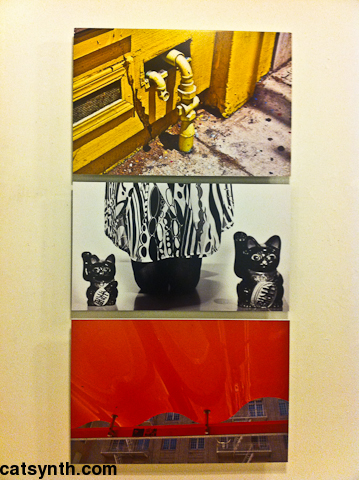
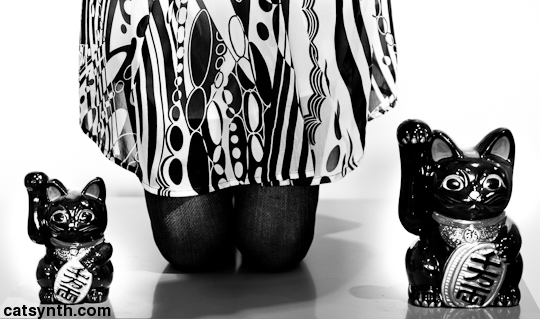
But it was also fun to wander the smaller streets, and find odd stores and corners. An occult store, where I found black-cat fur for good luck. An old book store with a resident cat as a host. And an artist selling these cat-themed jazz pictures (does one sense a theme here?).
Being interested in art, I headed up Canal Street on a still function streetcar line to the city park and the New Orleans Museum of Art. The park had suffered extensive damage from which it was still recovering, but the museum had weathered the storm quite well and reopened after a few months.
I spent most of my time in the city sculpture garden adjacent to the museum, which included several modernist works.
On the trip back along Canal Street, I paid closer attention to the buildings along the road. Particularly south of the park but north of the I-10 overpass, there was quite a bit of damage visible, with boarded up houses and entire bulldozed lots. Indeed, throughout the trip is impossible not to see the scars of Katrina.
Just east of the French Quarter was the Fauborg Marigny district. It was a bit funkier, and in retrospect and had that feel I enjoy in many neighborhoods of New York and San Francisco (think Lower East Side, the Mission, etc.). It was here that I sought out opportunities to hear local music. At The Spotted Cat I heard quite a few musicians both in traditional jazz idioms and other styles – this seemed to be music for a local crowd rather than for tourists, which is what I was looking for. And it had a cozy, dark, feel, with quirky lighting and artwork.
I did set aside some time to see what had become of the Lower Ninth Ward. In a rented car, I headed east on Claiborne Avenue (LA Highway 39) and crossed over the canal into the district.
I had of course followed the news and seen many images of the Lower Ninth Ward, but it’s another thing entirely to see it in person. And it’s not just one example, it kept going in all directions. And there were very few people around. It was eerily quiet, just me, the ruined buildings and the occasional car passing by. But the Ninth Ward’s history goes back far earlier than Hurricane Katrina, as it was the site were a certain Homer Plessey was removed from a train for sitting in a white car, leading to the infamous Supreme Court case Plessey v. Ferguson.
After the Lower Ninth Ward, I headed back across the canal and north to the edge of Lake Ponchartrain. The lake is huge, one can’t really see across it, especially on an overcast day. The waves and wind made me think of the windy Pacific coast of California.
Here, too, there were signs of what happened to the city, all the more ominous with the gathering storm clouds.
I did not actually leave New Orleans on that particular trip. If I had, I could have headed north over Lake Pontchartrain, which is no small feat. The Lake Pontchartrain Causeway is 23.83 miles long, and is ctonsidered the longest bridge over water in the world. (Though there is some dispute of the record the the Jiaozhou Bay Bridge in China.)
One can also cross the lake via I-10 on the Twin Span Bridge. At a mere 5.4 miles, the Twin Spans are dwarfed by the causeway, but it is still a respectable length. The original bridges were heavily damaged in Hurricane Katrina and have been replaced with newer spans. The lake itself tapers off to the east towards The Regolets, which connect the lake to the Gulf of Mexico. The Regolets pass helps regulate the flow of salt water and fresh water into and out of the lake. As Daily Kos member Crashing Vor points out, it “is one of the rare estuarial passes where, at the right time of day, you can fish for salt water species out of one side of the boat and fresh water from the other.”
[Photo courtesy of Crashing Vor on Daily Kos]
It is hard to escape from the regions food while exploring its geography. And in truth, why would one want to.
The eastern edge of New Orleans and Lake Ponchartrain is also home to NASA’ Michoud Assembly Facility, where many of the rocket and spacecraft engines have been built, including the first stage of the Apollo Saturn V rocket, and the external fuel tank of the Space Shuttle.
[Photo courtesy of Crashing Vor on Daily Kos]
Continuing on I-10 and US 90 east, we could head to Mississippi where we began our article on that state. But instead, we return to New Orleans and the banks of the Mississippi River.
[Photo courtesy of Crashing Vor on Daily Kos]
The river, too, is quite wide an impressive as it passes by the Crescent City – the nickname in fact comes from the bend in river as it passes by the city. We cross the river on the Crescent City Connection to the “west bank”, which is actually south here. We continue on US 90 Business and turn south onto LA 23 towards the town of Belle Chase. LA 23 crosses the Gulf Intercoastal Waterway via an old bridge and tunnel pair, and then hugs the west bank of the Mississippi to the mouth of the river.
The geography of southeast Louisiana is strongly shaped by the interaction of the river and the Gulf of Mexco. This is certainly true of New Orleans and Lake Pontchartrain, but it is most dramatic where the river literally pushes into the gulf. The small fractal-like slivers of land are really just a boundary between the two overlapping bodies of water.
LA 23 ends at the town of Venice, which is the last town accessible by standard automobile. The town really is just wedged on one of these fibrous tendrils of land up against the river. Of course, the remainder of the delta is accessible by boat, including the Delta National Wildlife Refuge and the Pass A Loutre State Wildlife Management Area. The natural environment of the delta, as well as towns such as Venice, have been hit twice in the last decade, first with Hurricane Katrina and then with the Deep Water Horizon oil spill in 2010.
New Orleans continues to function as the hub for this particular virtual exploration. We next head west on I-10 and turn south onto I-310, which crosses the Mississippi on the cable-styled Hale Boggs Bridge.
[Photo courtesy of Crashing Vor on Daily Kos]
We then head north (back on the east bank of the Mississipp) via US 61 to the town of Laplace. I was disappointed to find out this was not named for the Laplace transform in mathematics and signal processing, but on the plus side it is known as the “andouille capital of the world”. And we would be remiss if we did not stop here to sample the famous and tasty sausage.
We continue on I-10 past a junction I-12, which covers the northern side of Lake Pontchartrain, and arrive in the capital Baton Rouge.
[Photo courtesy of Crashing Vor on Daily Kos]
The Louisiana capitol building is quite distinctive. Rather than the typical Greek-inspired dome and columns, it is an Art Deco skyscraper. It in fact looks quite a bit like City Hall in Los Angeles. This capitol building was the “pride and joy” of Governor Huey Long. It is also where he ultimately met his demise in this hallway.
[Photo courtesy of Crashing Vor on Daily Kos]
We then cross the Mississippi again and turn south on Louisiana State Highway 1. At first, it follows the west bank of the river, but then heads southward, beginning a long parallel with LA 308 on opposite banks of Bayou Lafourche. We pass the town of Belle Rose, which I had written about in a post last year in an art-damage moment because it contained Highway 998 and fit well with a poem I had written called “998”. Continuing on LA 1 along the bayou, we come to the town of Thibodaux.
[Photo courtesy of Crashing Vor on Daily Kos]
As in New Orleans, the cemeteries are above ground here as well.
South of Thibodaux, we turn west on US 90. The is a major highway and being upgraded to interstate standards, passing by the Bayou Teche National Wildlife Refuge as well as several towns. We turn south onto LA 329 to Avery Island. This actually is not an island at all, but it is a salt mound that rises in an oddly circular fashion from the flat landscape. It is most known for being the home of Tabasco hot sauce. We at CatSynth are of course fans of all things hot and spicy, and so visiting this factory and a tasting session would be in order.
[Photos courtesy of Crashing Vor on Daily Kos]
We continue on US 90, which passes the towns of New Iberia and St Martinsville, on the Bayou Teche.
[Photo courtesy of Crashing Vor on Daily Kos]
We then come to the city of Lafayette, where we cross I-10 and continue northward on I-49. The area along the highway was part of an ancient flow of the Mississippi that apparently was wider and further west than it is today. Heading northward, the wet environment of southern Louisiana gives way to a drier landscape. Via LA 1 we come to city of Natchitoches, which has the feel of an older historic town.
We continue north on I-49 to its end at I-20 near Shreveport, the third-largest city in the state. The bypass highway I-220 spans nearby Cross Lake on a graceful modern bridge. The view from below with the arches is an interesting optical effect.
These dogs in a kayak are also quite admiring of the I-220 bridge.
And we end back along the Mississippi River with this video tribute.
We at CatSynth are happy to be hosting Weekend Cat Blogging #355. It’s actually quite a busy weekend, with Spring Open Studios and sundry activities. So the round-up won’t be posted until Sunday. But in the meantime, please do submit your cat-related posts via comments, via our facebook page, or tweet us @catsynth, and we will include you.
And so now let us get on with the round-up. It’s a small and intimate group so far this weekend, but we appreciate our participants all the same.
First up, Nikita and Elvira have been busy Remodeling their New HQ: The FNN Center. It features a multi-story cat tower as well as space for quiet contemplation. Check out the pictures. They also have a naming contest.
Elvira is also reaching new heights as a result of the placement of the new cat tower. Looks like fun, though I personally get a bit nervous when Luna gets up in high places.
I love this picture of Jules and Vincent peering over the balcony as they enjoy the first days of spring. It sounds like it has been a rainy start to the season in Alabama, just as it has been for us here in California.
Somewhere in between those two locations, our friends Samantha, Clementine and Maverick share share wordless portraits. Actually, there is a fourth portrait as well: a mysterious shadow. Who could that be?
We will continue to add folks to the round-up later today, so please keep your submissions coming. And thanks to everyone who participated.
The Tiger Synth VSTi some sound examples are single patches performed skillfully by Dimitri Schkoda plus some shorter ones by HGF
Only one patch used with each example showing you can have a wide variety of sound from fairly straight to really complex ones. with the enhanced realtime control options this is a real performance synth suiting many needs.
have fun
HG
The video has a retro movie sort of feel, does it not?
This is one of many new pieces I am presenting at Art Explosion Spring Open Studios in San Francisco this weekend. It’s the most stylized and provocative piece to date.
Our primary highways series continues today with a visit to the state of Illinois.
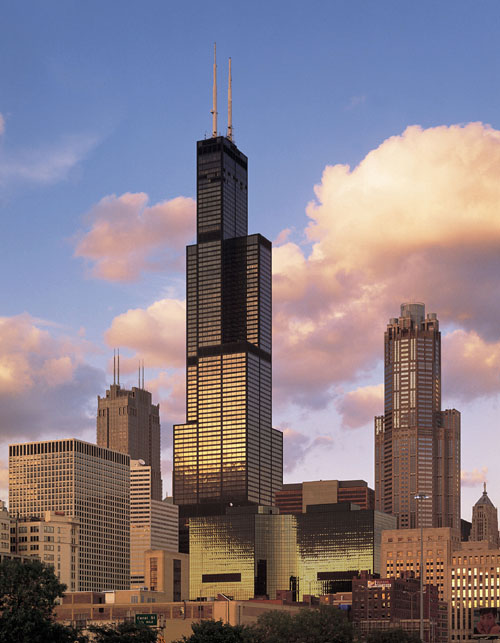
Throughout this series, I have been drawn to many of the large cities of the Midwest and Great Lakes. And none of these looms larger than Chicago. And none is taller. Chicago is home to the tallest building in the United States, the Sears Tower (officially, it is now called the Willis Tower but I doubt too many people call it that).
Downtown Chicago is a true vertical city, with not just a few tall buildings, but the densely packed skyscrapers that form deep canyons, much like Manhattan. But the presence of the Chicago River cutting a channel through the middle of downtown is quite unique. The buildings seem to come up to the water’s edge.
The Chicago River connects to Lake Michigan, but thanks to the miracles of human engineering, it actually flows in the other direction away from the lake (UPDATE: thanks to an astute reader on DailyKos for the correction!). US 41, Lake Shore Drive crosses at the mouth of the river in this unusual double-decker drawbridge. (The Aon Center is the tall building in the background. It reminds me a bit of something else.)
US 41 / Lake Shore Drive continues north and south of bridge as a scenic expressway with city buildings to one side and beaches along the lake to the other. The south end of the expressway is in the Hyde Park neighborhood, home of a certain Barack Obama.
Back in downtown, we find the complicated Circle Interchange, where I-90 and I-94 intersect with I-290 and the Congress Parkway. This interchange, which is often considered one of the worst bottlenecks in the country, connects the downtown to the lakefront and to the suburbs south and west of the city.
If we take I-290 west from this geometric oddity of an interchange, we come to the suburb of Oak Park. It was here that Frank Lloyd Wright began his storied architectural career. His home and studio in the town is a landmark, and there are numerous early examples of his prairie-style houses. Looking at his home and studio, one can see the elements that would be later refined in prairie style.
There is so much in Chicago I could go on about with regards to art, architecture, music and culture, but space is limited. I do have to give a shout-out to the Art Institute of Chicago, however. It’s collection is large and encyclopedic, but they do have sections that focus on both American and contemporary art. I would particularly like to see the new modern wing, both the building and the art contained within. For music, I invite readers to share the ideas and suggestions of what to explore in the city.
Back at the Circle Interchange, we head south on I-90/I-94, the Dan Ryan Expressway., one of the widest and busiest highways in the country. It has wide sections for both local and express lines, and a line of Chicago’s “L” runs down the center. I-90 veers off onto the Chicago Skyway, but I-94 continues south (though designated as “east”) on the Dan Ryan Expressway until the junction with I-57.
Continuing south on I-57, we pass by our friend I-80 in the southern suburbs of Chicago and eventually come to Champaign and Urbana after crossing I-74 – it does seem that Illinois has a lot of interstate highways. This cities are home to the University of Illinois at Urbana Champaign, the flagship campus of the University of Illinois. It hosts the NCSA (The National Center for Supercomputing Applications) that created the first graphical web browser Mosaic.
It’s hard to imagine life without this technology now, it is ubiquitous and integrated into so much of information, communication and entertainment. Of course, without it you would not reading this article, and I would probably not be writing it. Earlier in its history, the University was home to ILLIAC. At the time it was activated in 1952, it was the largest computer built and owned by an American university. This huge vacuum-tube based machine had 5 kilobytes of main memory and 64k of drum memory. For perspective, consider how much more memory and computation is in an iPhone now.
Before we overdose on computer history, we exit Champaign-Urbana on I-72 heading westward. (Did we mention that Illinois has a lot of interstate highways?). This view along the highway suggests just how flat the landscape is in this region, with the road completely straight.
Springfield is steeped in the history and mythology of Lincoln, probably more than any other city in the state. He lived there for 24 years and launched his political career there. And his final resting place, Lincoln’s Tomb is in Springfield.
[Lincoln’s Tomb, Oak Ridge Cemetery, Springfield, Illinois, 2006. Robert Lawton (self), via Wikimedia Commons.]
We also find another well-known Frank Lloyd Wright home in Springfield, the Dana-Thomas House. It has rather large and often considered a “prairie mansion”. It does contain the horizontal forms and low angular ceilings characteristic of prairie style, but the most notable features that distinguish are the windows.
We head south from Springfield on I-55, on another incredibly straight stretch of highway through very flat landscape. For those who have lived among hills our entire lives, these flat plains are a novel experience. It’s not only the land, but also the sky.
There is a significant break in the flat landscape of western Illinois along the Illinois River. Illinois Route 100 runs along the the west bank of the river amidst trees and bluffs. It then crosses a bridge and continues along the east side until the Illinois River meets the Mississippi River.
The Great River Road continues past the end of IL-100 and into the greater St. Louis metropolitan area. As the landscape along the river becomes more suburban and then urban in St. Clair county, the road bounces around many other designations, including I-70 in East St. Louis. From here we can continue across the Mississippi to St. Louis itself, or continue southward on the Great River Road as IL-3.
We opt for the latter, passing through towns with Egyptian sounding names until we come to Cairo, at the southern tip of the state, where the Ohio and Mississippi rivers meet. We meet I-57 again and then continue into the town itself on US 51. Cairo (pronounced KAY-RO) was once a significant center of trade along the rivers. But it has been in a long decline, and now has a population of about 2,800. Indeed, some views of the town make it look nearly abandoned.
The photo almost looks like something from Doug Rickard’s series. It’s sad, but also quite interesting in a way. It’s a long way between Chicago and Cairo, but it would be great to see and photograph both of them in one big trip across the state.






 We start in New Orleans, which I visited in November of 2006, during the recovery from Hurricane Katrina. Coming in from the airport on I-10 we approached the downtown. The highway comes close to the Superdome and the downtown buildings. A large interchange connects to Business US 90, which heads over the Mississippi River via the Crescent City Connection. It was good introduction.


 I did set aside some time to see what had become of the Lower Ninth Ward. In a rented car, I headed east on Claiborne Avenue (LA Highway 39) and crossed over the canal into the district.


 The river, too, is quite wide an impressive as it passes by the Crescent City – the nickname in fact comes from the bend in river as it passes by the city. We cross the river on the Crescent City Connection to the “west bank”, which is actually south here. We continue on US 90 Business and turn south onto LA 23 towards the town of Belle Chase. LA 23 crosses the Gulf Intercoastal Waterway via an old bridge and tunnel pair, and then hugs the west bank of the Mississippi to the mouth of the river.

 New Orleans continues to function as the hub for this particular virtual exploration. We next head west on I-10 and turn south onto I-310, which crosses the Mississippi on the cable-styled Hale Boggs Bridge.
 We then head north (back on the east bank of the Mississipp) via US 61 to the town of Laplace. I was disappointed to find out this was not named for the Laplace transform in mathematics and signal processing, but on the plus side it is known as the “andouille capital of the world”. And we would be remiss if we did not stop here to sample the famous and tasty sausage.


 We then cross the Mississippi again and turn south on Louisiana State Highway 1. At first, it follows the west bank of the river, but then heads southward, beginning a long parallel with LA 308 on opposite banks of Bayou Lafourche. We pass the town of Belle Rose, which I had written about

 South of Thibodaux, we turn west on US 90. The is a major highway and being upgraded to interstate standards, passing by the Bayou Teche National Wildlife Refuge as well as several towns. We turn south onto LA 329 to Avery Island. This actually is not an island at all, but it is a salt mound that rises in an oddly circular fashion from the flat landscape. It is most known for being the home of Tabasco hot sauce. We at CatSynth are of course fans of all things hot and spicy, and so visiting this factory and a tasting session would be in order.


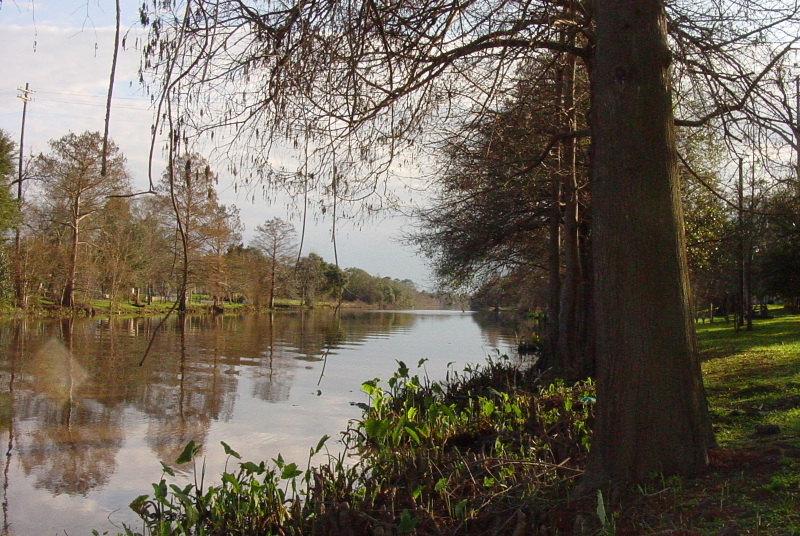
 We then come to the city of Lafayette, where we cross I-10 and continue northward on I-49. The area along the highway was part of an ancient flow of the Mississippi that apparently was wider and further west than it is today. Heading northward, the wet environment of southern Louisiana gives way to a drier landscape. Via LA 1 we come to city of Natchitoches, which has the feel of an older historic town.
 We continue north on I-49 to its end at I-20 near Shreveport, the third-largest city in the state. The bypass highway I-220 spans nearby Cross Lake on a graceful modern bridge. The view from below with the arches is an interesting optical effect.






 US 41 / Lake Shore Drive continues north and south of bridge as a scenic expressway with city buildings to one side and beaches along the lake to the other. The south end of the expressway is in the Hyde Park neighborhood, home of a certain Barack Obama.
 If we take I-290 west from this geometric oddity of an interchange, we come to the suburb of Oak Park. It was here that Frank Lloyd Wright began his storied architectural career. His home and studio in the town is a landmark, and there are numerous early examples of his prairie-style houses. Looking at his home and studio, one can see the elements that would be later refined in prairie style.

 Back at the Circle Interchange, we head south on I-90/I-94, the Dan Ryan Expressway., one of the widest and busiest highways in the country. It has wide sections for both local and express lines, and a line of Chicago’s “L” runs down the center. I-90 veers off onto the Chicago Skyway, but I-94 continues south (though designated as “east”) on the Dan Ryan Expressway until the junction with I-57.
 Continuing south on I-57, we pass by our friend I-80 in the southern suburbs of Chicago and eventually come to Champaign and Urbana after crossing I-74 – it does seem that Illinois has a lot of interstate highways. This cities are home to the University of Illinois at Urbana Champaign, the flagship campus of the University of Illinois. It hosts the NCSA (The National Center for Supercomputing Applications) that created the first graphical web browser Mosaic.
 Before we overdose on computer history, we exit Champaign-Urbana on I-72 heading westward. (Did we mention that Illinois has a lot of interstate highways?). This view along the highway suggests just how flat the landscape is in this region, with the road completely straight.


 We head south from Springfield on I-55, on another incredibly straight stretch of highway through very flat landscape. For those who have lived among hills our entire lives, these flat plains are a novel experience. It’s not only the land, but also the sky.
 There is a significant break in the flat landscape of western Illinois along the Illinois River. Illinois Route 100 runs along the the west bank of the river amidst trees and bluffs. It then crosses a bridge and continues along the east side until the Illinois River meets the Mississippi River.
 The Great River Road continues past the end of IL-100 and into the greater St. Louis metropolitan area. As the landscape along the river becomes more suburban and then urban in St. Clair county, the road bounces around many other designations, including I-70 in East St. Louis. From here we can continue across the Mississippi to St. Louis itself, or continue southward on the Great River Road as IL-3.
 We opt for the latter, passing through towns with Egyptian sounding names until we come to Cairo, at the southern tip of the state, where the Ohio and Mississippi rivers meet. We meet I-57 again and then continue into the town itself on US 51. Cairo (pronounced KAY-RO) was once a significant center of trade along the rivers. But it has been in a long decline, and now has a population of about 2,800. Indeed, some views of the town make it look nearly abandoned.


