Outsound Music Summit: Fire and Energy

The final concert of the 2012 Outsound Music Summit was Fire and Energy, a night of “improvised-jazz-inspired-music.” Labeling a new-music concert as jazz can often be treacherous, with some people all-too-quick to join arguments about what does and does not qualify as “jazz.” But in the case if this evening’s artists, who all had long established histories in the world of improvised free-jazz, there should be no argument.

The concert opened with a solo set by Jack Wright, a long-time veteran and leader of the Bay Area improvised music scene. His performance began on soprano saxophone with discrete notes and short phrases filled with overtone, microtones, percussive sounds. The were some moments that were quite subtle, with long notes that had deliberate microtonal variations or timbral variations on a single pitch- I found this to be quite expressive. There were other more melodic sections that made reminded me of old popular jazz recordings from the 1930s. Wright communicated a lot of emotion in his improvisations, with some parts sounding quite plaintive, almost a lamentation, while others were bright and happy. The first have of his set ended with some exceptionally high notes.


[Jack Wright. Photo: PeterBKaars.com.]

Wright then switched to alto saxophone. There was something about this piece that just seemed “jazzier” – it’s difficult to pinpoint any one thing, but perhaps it is just the nature and expectations of the alto sax. This piece was also a bit louder and aggressive, with numerous scoops, bends, growls and noises. He employed extended effects with the bell to change the dynamics and timbre of the instrument (including at one point playing with the instrument pointed into his knee), and used key clicks, buzzing and voiced tones.

The next set featured Dave Bryant, first performing solo on acoustic piano and then in a trio with drummer Dax Compise and bassist Bryan Clark. Bryant is best known for his work as a member of Ornette Coleman’s Prime TIme group, and as an expert and teacher of Harmolodic Theory. His solo piano work was an impressive virtuosic display, with a barrage of fast moving chords up and down the keyboard that nonetheless were quite expressive. It felt like the music was constantly moving towards something, a bit frantically. Then all at once the energy was released as if in a sigh. He spent a fair amount of time in the often under-appreciated lower registers of the instrument, and kept the velocity of the performance going. The big loud low chords were followed by softer high chords in a moment that was reminiscent of late Romantic piano music. As he continued, he was joined on stage by Comprise and Clark, and in an instant the solo turned into an acoustic jazz trio.


[Dave Bryant Trio. Photo: PeterBKaars.com.]

After a short section, Bryant switch to electric keyboard and the character of music changed considerably. It became softer and dreamier, with the bass setting the tone and pace. But there was still forward motion to the performance, and more of Bryant’s virtuosic high-speed chord work that at times seemed superhuman. The pace slowed down again, with a distinctly blues-like line and then pentatonic glissandi. After another reset, a new harmony and rhythm emerged with Bryant leading the group into heavy, almost final-sounding cadences. In between, there were bass and drum solos and more frenetic work, but the cadences remained as the framework. It all came to a sudden by definite stop.

The following set featured Vinny Golia with his sextet, including Gavin Templeton on alto sax, Daniel Rosenboom on trumpet, Alex Noice on guitar, Jon Armstrong on electric bass, and Andrew Lessman on drums. Of all the performances on this evening, this one most embodied the concert title “Fire and Energy.” There was an intensity to the full ensemble in both fast runs, hits, and the driving rhythm that underpinned the set-spanning piece. It began rather quietly, with Golia on pray bowls. Soon, the other members of the group entered with long drone sounds, along with soft symbols, trumpet noise and a chime harmony. Golia always has a collection of saxophones and other wind instruments at his disposal, and he switched to a smaller instrument that looked like a soprano sax but with a bent neck, which he played together with Rosenboom on trumpet. The music gradually became more animated and evolved in a unison rhythm and eventually into a rather funky groove. I can easily get absorbed into music like this.


[Vinny Golia Sextet. Photo: PeterBKaars.com.]

The rhythm continued for a while, with various interruptions, including some solos – Rosenboom in particular tore it up during his trumpet solo. Then there was a sudden change in rhythm and texture, led by Templeton on alto sax. Rather then the unified driving rhythm, the ensemble played a complex intricate orchestration that still retained a rhythmic structure. There were more extended effects and sounds, such as squeaking and percussive effects, and Noice used a Kaoss Pad with his guitar. Golia switched to bass clarinet for a slower section of music that included a short four-part “chorale”. The ensemble quieted down and the prayer bowls returned, before everyone joined in for a final segment to close the set.

The final set of the evening and of the Summit as a whole was also the largest in terms of personnel. Tony Passarel’s Thin Air Orchestra is a project that brings together a large number of improvising musicians, and on this night the group swelled in number to include several musicians from the previous sets, including Vinny Golia and Dax Comprise, as well as regulars from Outsound. Festival director Rent Romus was able to temporarily remove his directors hat and play saxophones in the ensemble. Other players that evening included Ross Hammond, Randy McKean, Keith Kelly, John Vaughn, Cory Wright, Ken Kawamura, Tom Djll, CJ Borosque, Murray Campbell, Keith Cary, Mike Turgeon, Bill Noertker and Gerry Pineda.


[Tony Passarel’s Thin Air Orchestra. Photo: PeterBKaars.com.]

The first piece began with unison trumpets, soon joined by viola. The texture was very sparse, but they were soon joined by Hammond on guitar and the other instruments followed in a crescendo made of small bits of sound. There was a brief sax-and-flute duo, and playing inside the piano strings by Passarell. The next piece began with the rhythm section (piano, electric bass and drums) in a fast sparse motion, followed by a huge cloud of sound from the entire ensemble. The music became more rhythmic for a bit and then everyone hit one big chord.

For the next couple of pieces, vocalist Loren Benedict joined the group. After an intro with ponderous piano and then a funky rhythm, Benedict launched into an impressive stream of fast highly rhythmic scat singing. The other musicians joined in the rhythm with him. Rent Romus also had a particularly crazy double-sax solo in this piece.

One of the last pieces was softer and did not have as intense a rhythm. The guitar and viola were rather bluesy and were joined by Tom Djll with extended-technique trumpet noises. Hammond’s hard-driving guitar and minor chords combined with the others made this the ensemble’s “Miles Davis Moment” (with apologies to Raskin and Haryman from the Sonic Poetry Night). Benedict came back and joined the group for a big finale.

This was once again a long concert, but it went by rather fast given the energy and vitality of the music. It was a very strong final concert in what was a particular strong Outsound Music Summit this year.

DJ CatSynth on The World of Wonder (KUSF in Exile)

Tonight at midnight PST, I will be guest-hosting Matt Davignon’s program The World of Wonder on San Francisco Community Radio (KUSF in Exile). You can listen live here at midnight, or find an archived edition at the same location afterwards for those who aren’t awake at that time (it’s 3AM EDT in the US, for example).

The program will feature a variety of unusual music, including several friends from here in the Bay Area and New York, as well as some classics of modern electro-acoustic music. If you enjoy the musical offerings of this site, I invite you to tune in!

Weekend Cat Blogging #372

For Weekend Cat Blogging, we have a bit of simplicity and elegance.

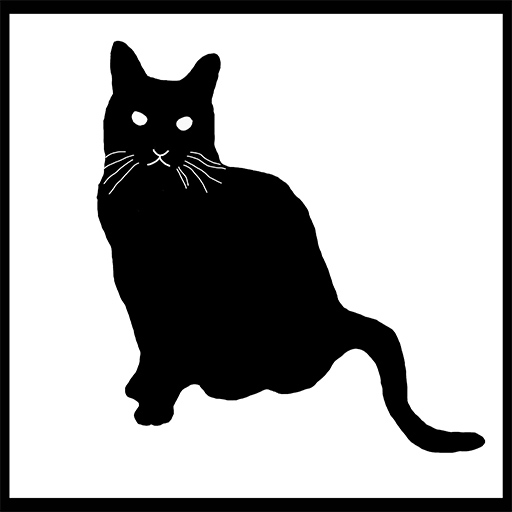
Luna strikes a perfect pose in the living room of CatSynth HQ. Here is to hoping that today is as calm and focused as this image.


Weekend Cat Blogging #372 is hosted by Ritzi at Mind of Mog.

The Carnival of the Cats will be up this Sunday at Meowsings of an Opinionated Pussycat.

And the Friday Ark is at the modulator.

Outsound Music Summit: Thwack! Bome! Chime!

Today we continue our reviews of the Outsound Music Summit with Thwack! Bome! Chime!, an evening of modern percussion performances. There was quite a bit of Thwack! and more than a couple of Chimes. But I am not quite sure about the Bome! part.

The concert opened with a solo set by David Douglas performing with acoustic percussion, MIDI controllers and a laptop running Max/MSP. His approach, visually, physically and musically, is to integrate the traditional drums, cymbals and acoustic noisemakers with the electronics in a single unit.


[David Douglas. Photo: PeterBKaars.com.]

I had last seen Douglas perform at the Luggage Store Gallery before Reconnaissance Fly. I recalled that performance being richly textured, but his setup and musical performance on this night was more varied and sophisticated. He began with short taps on a drum with granular and pitch effects cascading out of the percussion sounds. These gradually evolved into more complex rhythms and drum rolls augmented with tonal pitches. The acoustic sources expanded from the drum to percussive hits with sticks and other implements, with more pitched elements and eventually faster more rhythmic playing. As the set unfolded, there more complex polyrhythms as well as very subtle quiet sections, and sounds that were further afield from traditional percussion, with long electrical drones. There was an abrupt shift the cymbals with gliding pitch shifts and long tones. He also used lights and a mobile device to control electronic elements. At one point during the set, the music became more like techno/electronica, with repeated rhythmic patterns and in-time delays and hits. His performance continued as a single, continuously changing improvisation for the duration of the set.

The next set featured Falkortet, a local percussion ensemble that composes pieces for itself in a variety of styles. Members of the ensemble include Lydia Martin, Ed Garcia, Timothy Black and Josh Mellinger.


[Falkortet. Photo: PeterBKaars.com.]

The ensemble entered from the rear in the hall in a slow procession, with metal percussion and led by Martin on a conch shell. The scene and sound reminded me of a wedding or celebration band that one might find in South Asia or the Middle East. The performers took their seats at various points of the stage and the rhythm steadied into a syncopated pattern with a bit of a swing. It grew louder and more complex over time and then all at once soft.

The remainder of Falkortet’s set featured a series of short compositions in a variety of idioms and was quite a contrast to Douglas’ single abstract improvisation. There was a piece with three standard drum sets and a piano that included both loud drumming and a section that was jazz or tango-like. Another piece featured a marimba, a large hand drum and bells that reminded me of gamelan instruments, especially as the music unfolded first a single unison phrase that splinted into more complex polyrhythms and variations. After the piece, they explained that the bell instruments were in fact prototypes for an “American gamelan.”, and that many of their instruments were made from found objects or recycled materials.


[Falkortet. Photo: PeterBKaars.com.]

A couple of other pieces that particularly caught my attention was a marimba quartet with soft chords and subtle changes at different rates. It was quite meditative. The last couple of pieces with vibraphone, marimba and drums had a more jazzy feel, with familiar minor chords, blues scales and even a bit of a funky vibe at times. It was a fun way to close the set.

The final set featured the premier of Seems Like An Eternity, a new composition by Benjamin Ethan Tinker for percussion and electronics. Tinker, who performed in the piece on Arp 2600 and an Echoplex, was joined by Lydia Martin and Tim Black from the Falkortet, as well as Shani Aviram on kalimba, and April-Jeanie Tang and Daniel Steffey from Touch-the-Gear night.


[Benjamin Ethan Tinker and ensemble members. Photo: PeterBKaars.com.]

I was quite interested in hearing this piece after learning about it during the Composers’ Forum earlier in the week, and was glad to see that most of the audience stayed to support the performance as well even though it was already 11PM. It had a very elemental theme “evoking the desert night sky”. On a more technical level, it subverted the usual character of percussion by avoiding discrete sounds and instead using the instruments to generate drones. It unfolded with long tones with pitch variations, some of which reminded me of whale songs. A cymbal roll added both grown and higher-frequency content, while rubbing on timpani drums and rubber mallets on a wood surface added a thick middle-frequency drone. It was not purely drone, however, as bits of crackly sound came and went,. There were also empty spaces in the sound. I did find myself listening for the Arp within the soundscape, and identified some very noisy sounds and wobbly arpeggios from the instrument. At one point there was a very elemental loud metal shake evocative of a thunderstorm. Again, the overall drone was broken up by the sounds of small metal pitched percussion. The sound grew softer and lower in frequency, with the electronics moving into a subsonic realm where the waveform became a chain of discrete percussive sounds. After an electronic solo, the other instruments returned in, converging on a single tone. The sound became crunchier and more varied in timbre, with granular elements and then grew into a series of loud swells towards the end of the piece.

This was a long concert, and some ways a bit of endurance test. But it was rewarding to fully experience all three sets their entirety, as it is not that often one gets to hear an entire concert dedicated to percussion like this.