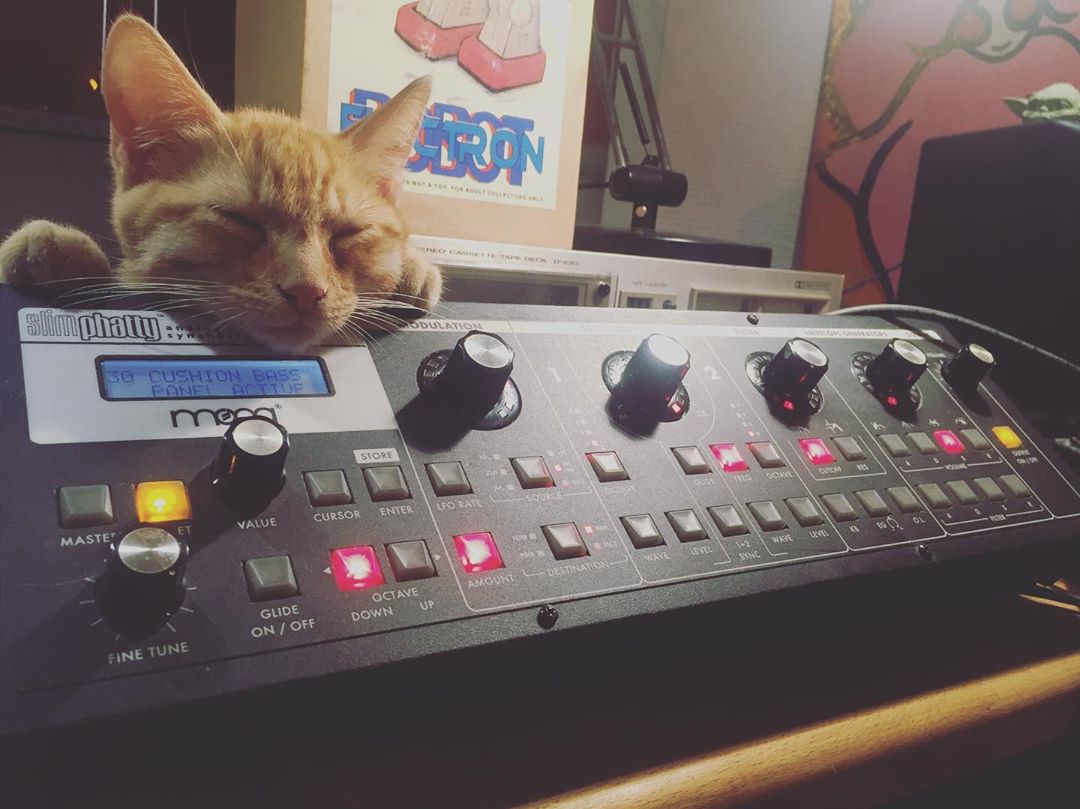
This is one of several adorable pics of orange tabby Nina with a Moog Slim Phatty synthesizer. From ros_frank via Instagram. The entire collection of portraits is embedded below.
This is one of several adorable pics of orange tabby Nina with a Moog Slim Phatty synthesizer. From ros_frank via Instagram. The entire collection of portraits is embedded below.
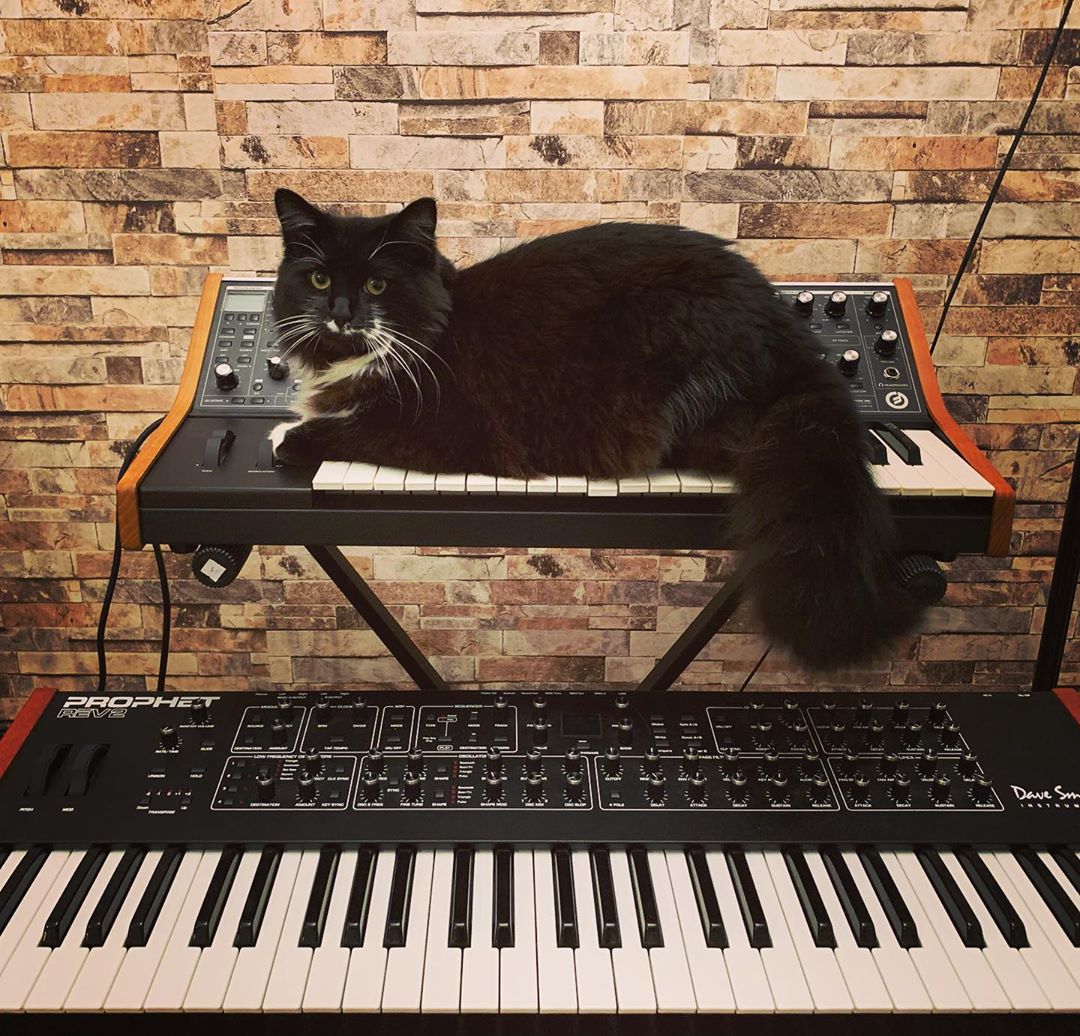
Figaro the handsome tuxedo cat sits atop a Moog Subsequent 37 synthesizer, along with a Prophet REV2 from Sequential (Dave Smith Instruments). From yvesanthonylaur via Instagram.
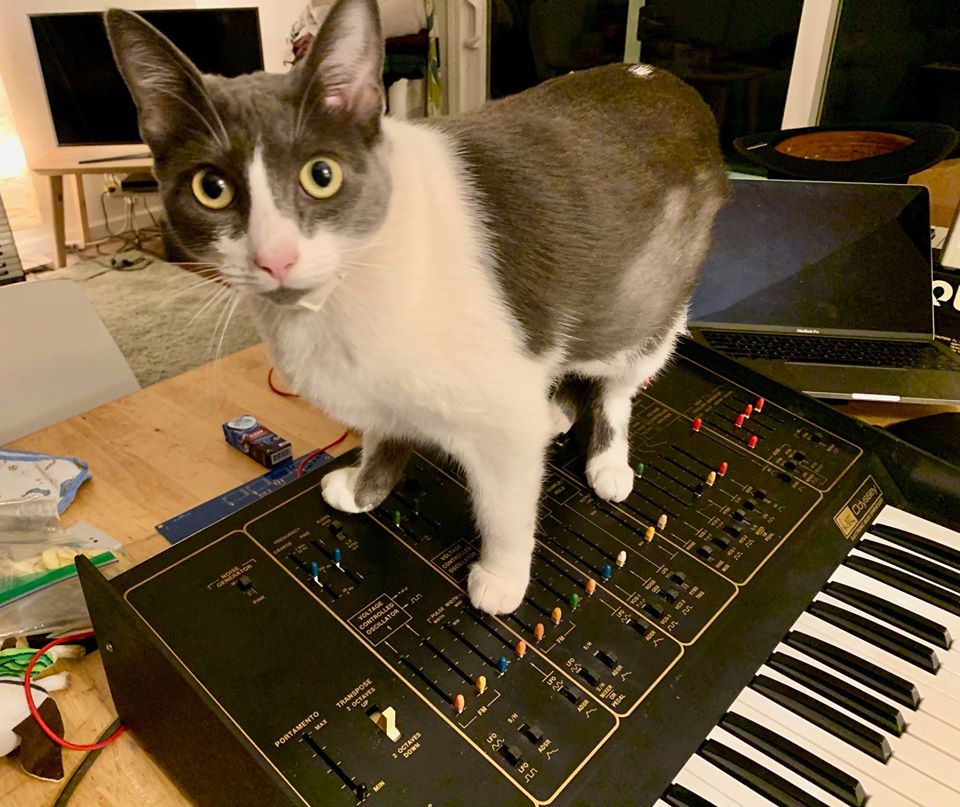
Gracie is back! This time with a first-version Arp Odyssey (before the red Helvetica style). From Alison Synthetic Dreamscapes.
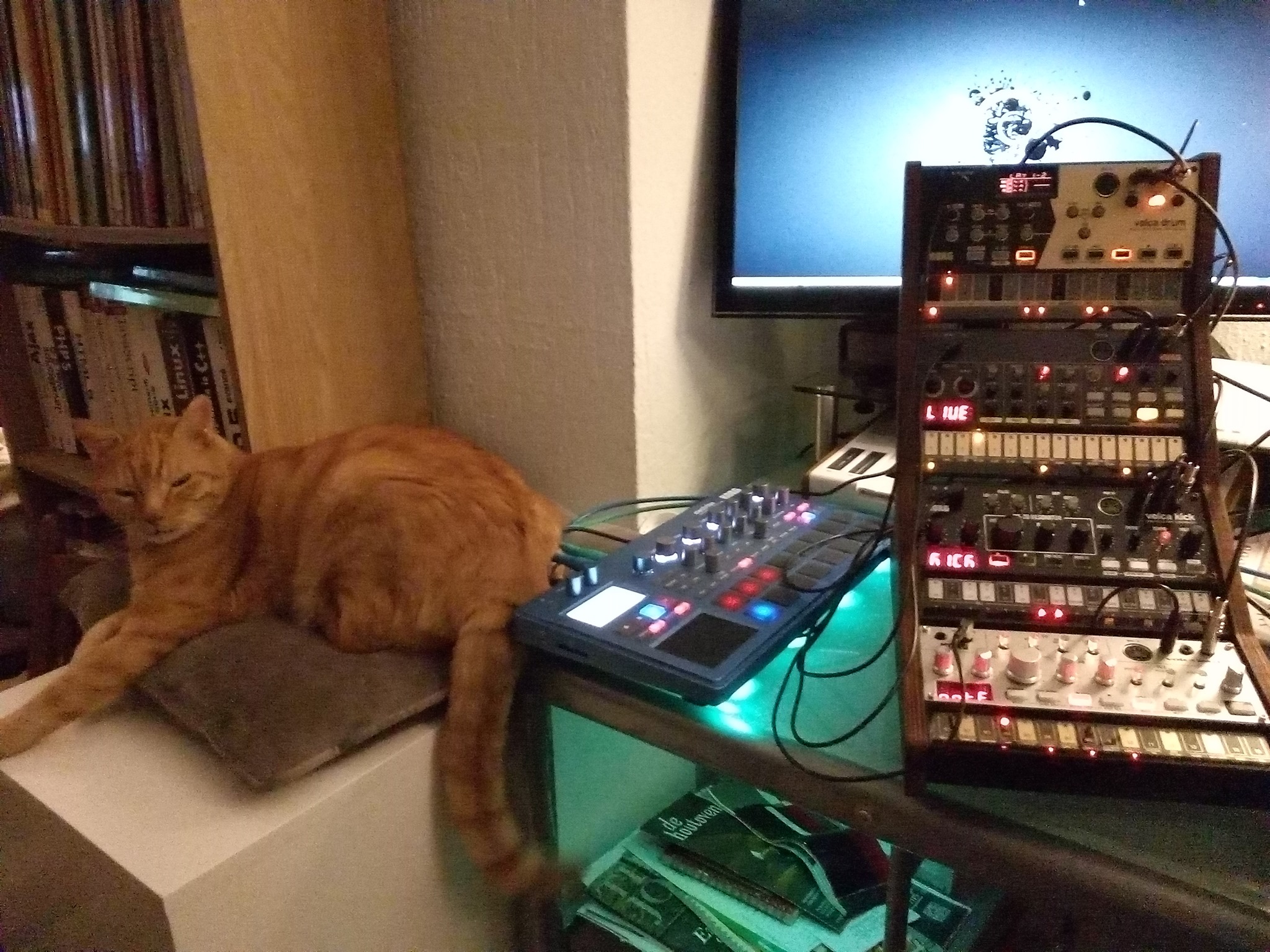
An orange cat lounges next to a “Tower of Volca”. Submitted by Greg Roussac via our Facebook page.
I see a Kick, Beats, Drum, and Bass. We at CatSynth have a Beats, along with our favorites: the FM and the Modular. If you have not yet done so, please check out our new demo of the Volca Modular, and we will be giving one away on February 9!
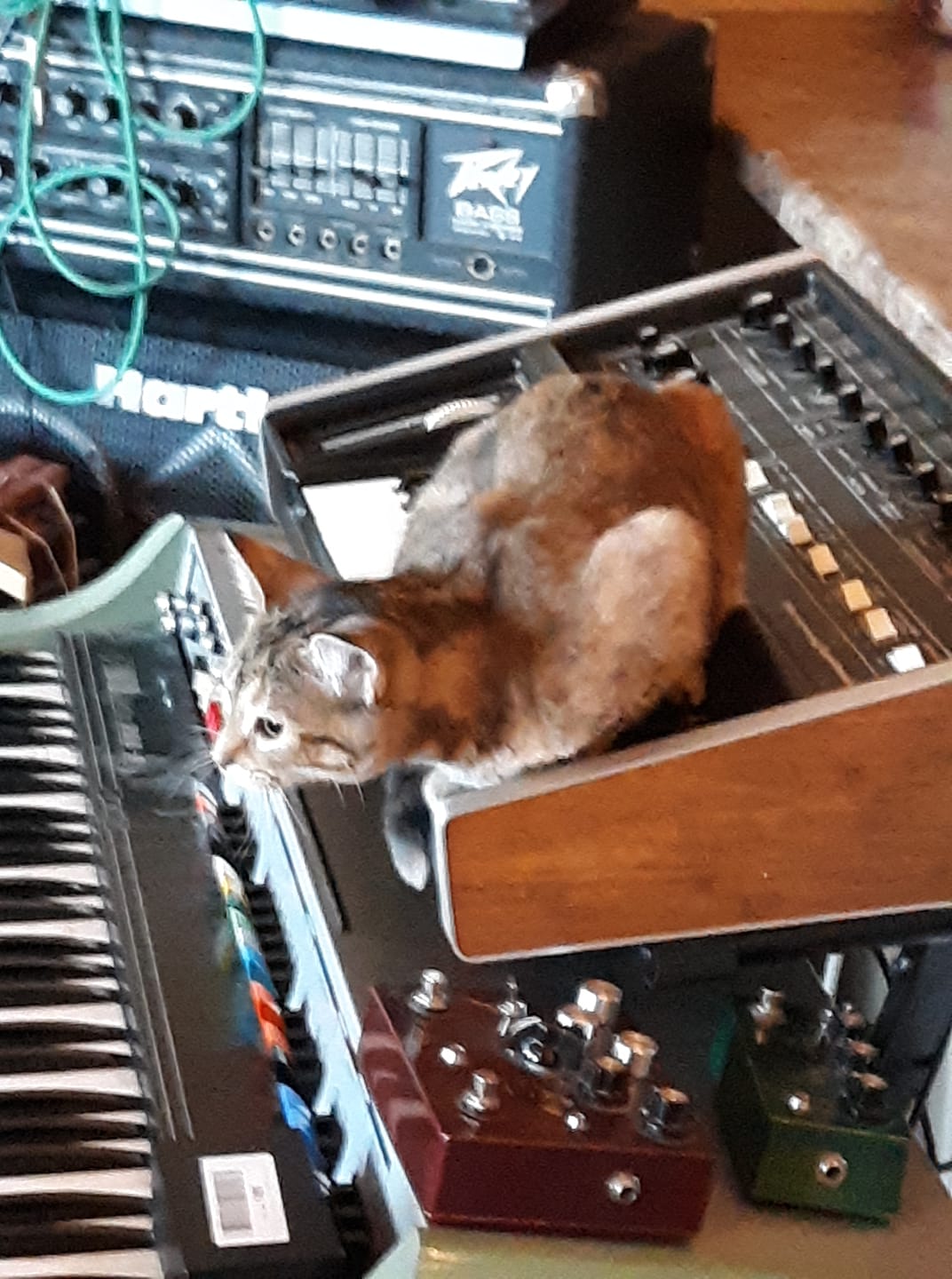
This cat is trying to reach the stops on the Farfisa VIP organ while sitting on a Micromoog synthesizer. From Chris Weirdall via Facebook.
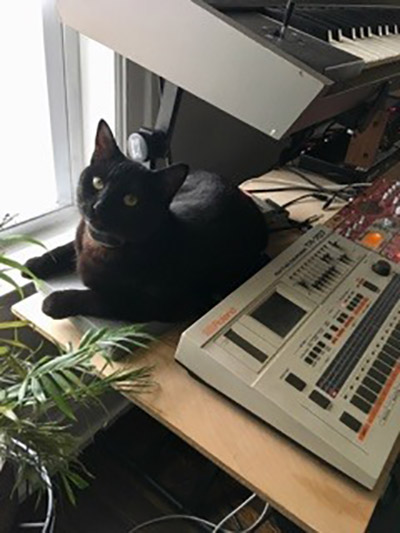
Newt hanging out in the studio underneath a keyboard and next to a Roland TR-707 drum machine. Submitted by David Cole via our Facebook page.
Newt hanging out while I do some studio maintence.
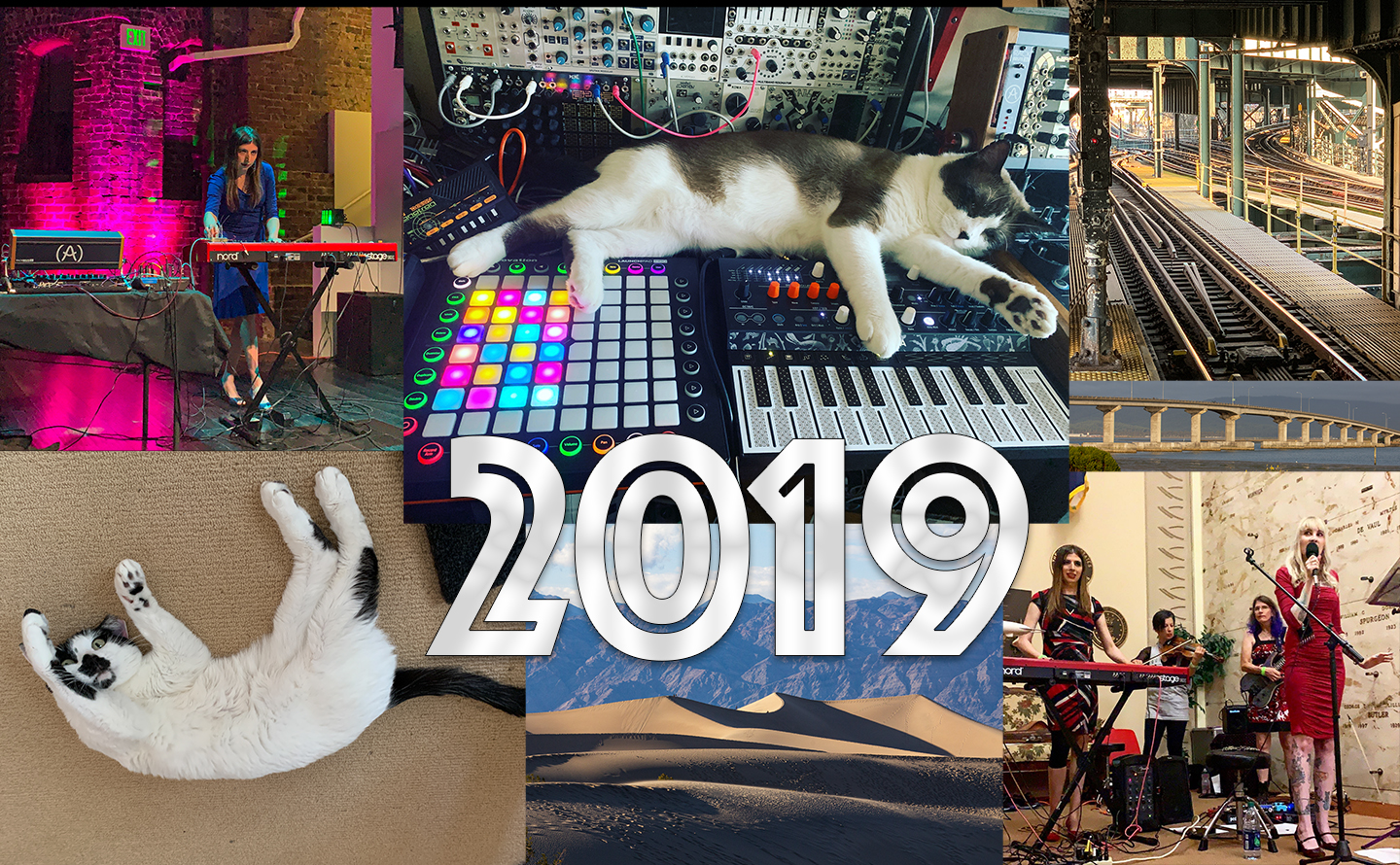
Our year-end collage is a long-standing tradition at CatSynth. And we had a lot of fun making this year’s edition, so many wonderful images to choose from. One of my best solo performances to date took place at the Compton’s Cafeteria series at the Center for New Music. Big Merp came to live with has at CatSynth HQ. And our adventures took us from the halls of NAMM to the bottom of Death Valley to the subways of New York.
As we mentioned at the end of last year, most of the energy has moved to CatSynth TV and our social media platforms (especially our Facebook page). The blog is mostly our core cat-and-synth pics these days, although I do enjoy sharing long-form articles now and then. And In 2020, I do plan to revive the “primary highways” series from eight years ago.
On the video side, things have been going very well. Here are the top videos for 2019:
By early autumn, I was also thinking about this year as a “tipping point.” The transition from the blog to the video channel is the most obvious, but it also applies also on the personal side. The arrival of Big Merp was one of the big stories, and it’s been a tough integration getting both cats to coexist, but things have been trending well in the past few months, with Sam Sam regaining her confidence and HQ becoming a more harmonious place again. Musically, I have moved in a direction that is perhaps closer to my roots in jazz, fusion, funk while maintaining the experimental electronic aspects. I have also moved to a point where studio work is how I spend most of my musical time, between the videos and other projects. Finally, I am getting older, as we all are, and that adds both perspective and a need to focus on health and wellbeing. In 2020, I may “do fewer things” than in the past, but I hope the things I choose to do make an impact both personally and beyond.
There is a lot to look forward to in the coming days: NAMM 2020 is around the corner, I have a full queue of demos to share, and I am laying the foundations for some major musical projects. And of course, we will continue to post cats and synths.
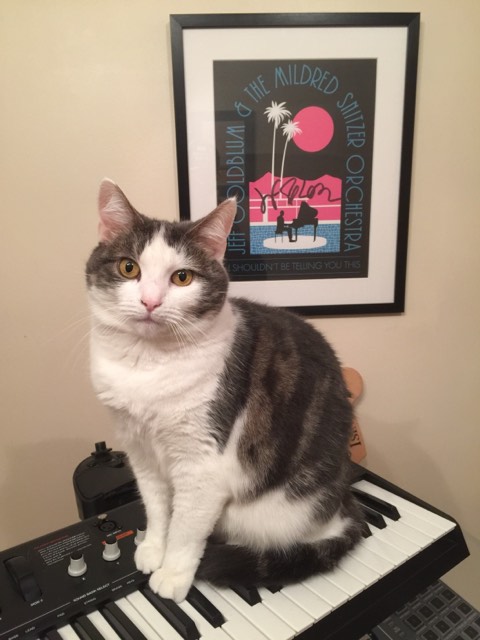
Georgina sits proudly on top of an Akai MINIAK synthesizer. Submitted by Steve Lamb via our Facebook page.
I will confess, I was not familiar with the MINIAK. After looking it up on the Akai site, it sounds like an interesting little instrument, especially the vocoder. Indeed, it reminds us a bit, at least feature-wise, of the Roland JDxi (which also has a vocoder), although the oscillator sections differ significantly.
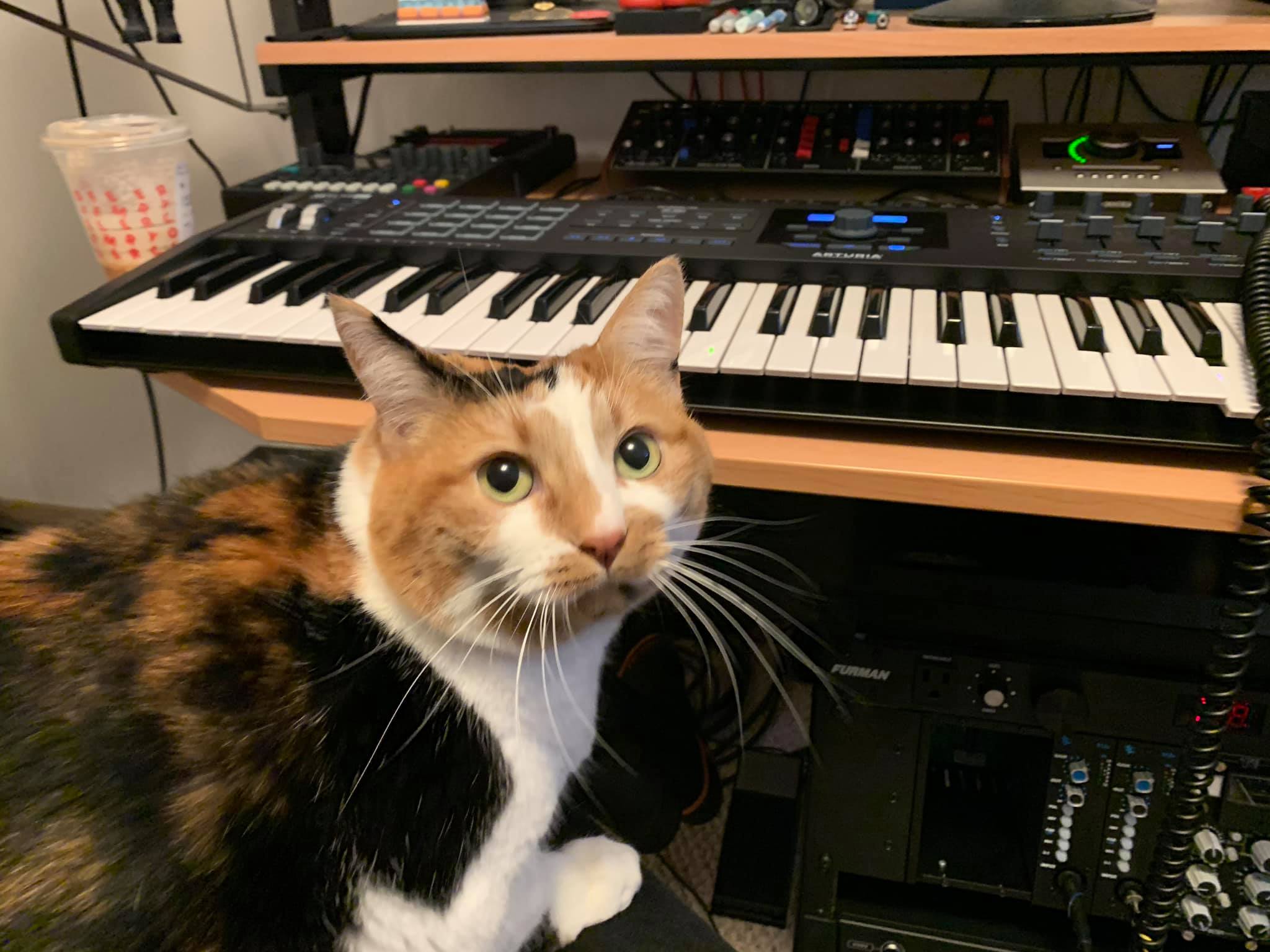
Beautiful Persophone returns. This time she has an Arturia keyboard controller to go along with the Behringer Model D (center rear) and sundry other items. From Rob Robinson via Facebook.
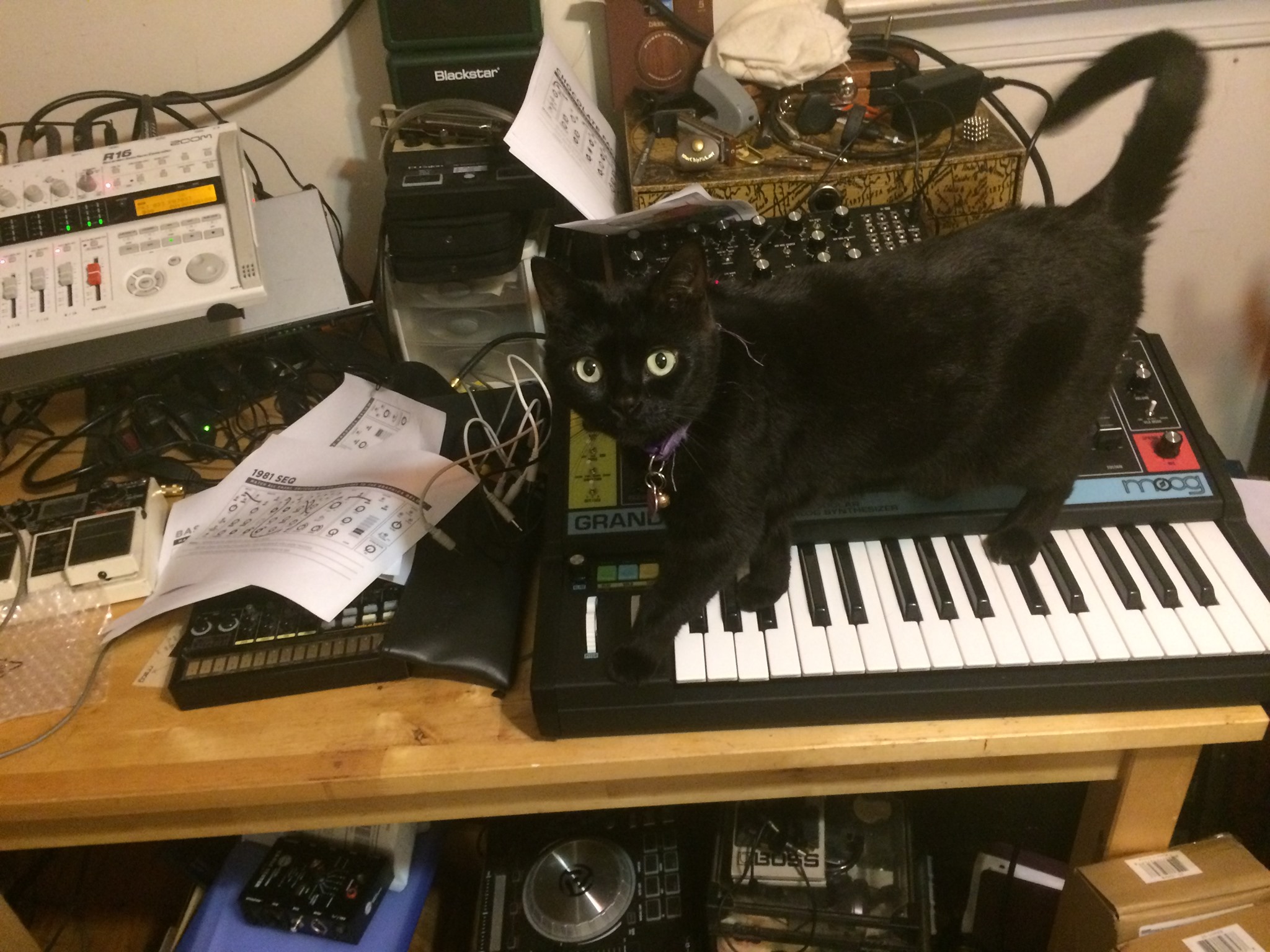
An adorable black cat performs on a Moog Grandmother synthesizer. We also a Korg Volca and a nice-looking Zoom R16 audio interface nearby. From Drew Christopher Ratliff via Facebook.
I absolutely love this beautiful little cat with black fur and green eyes. But it does remind me a bit of our sweet Luna, so this is a little layer of sadness along with the beauty.
The Moog Grandmother is part of the semi-modular series that also includes the Mother-32 and the Matriarch. They are all very accessible ways to get into Moog synthesizers. And they have a colorful design reminiscent of the MG-1.