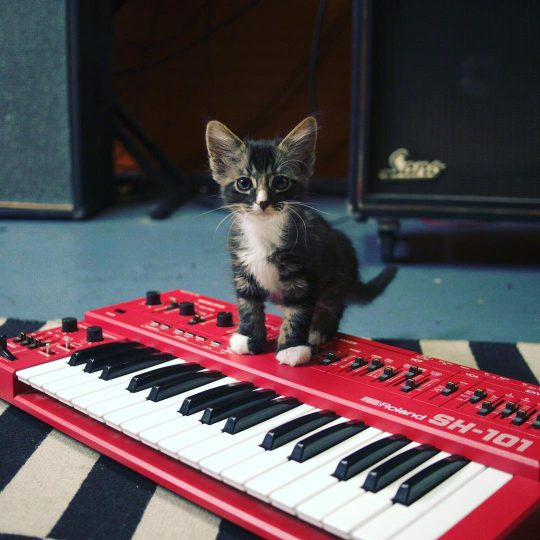
Adorable kitten sitting atop a red Roland SH-101 synthesizer. From the Vintage Synthesizer Museum.
This cat wants to remind you that VSM is offering a hands-on Intro to Synthesis workshop on September 22nd. Contact us for details or to enroll.
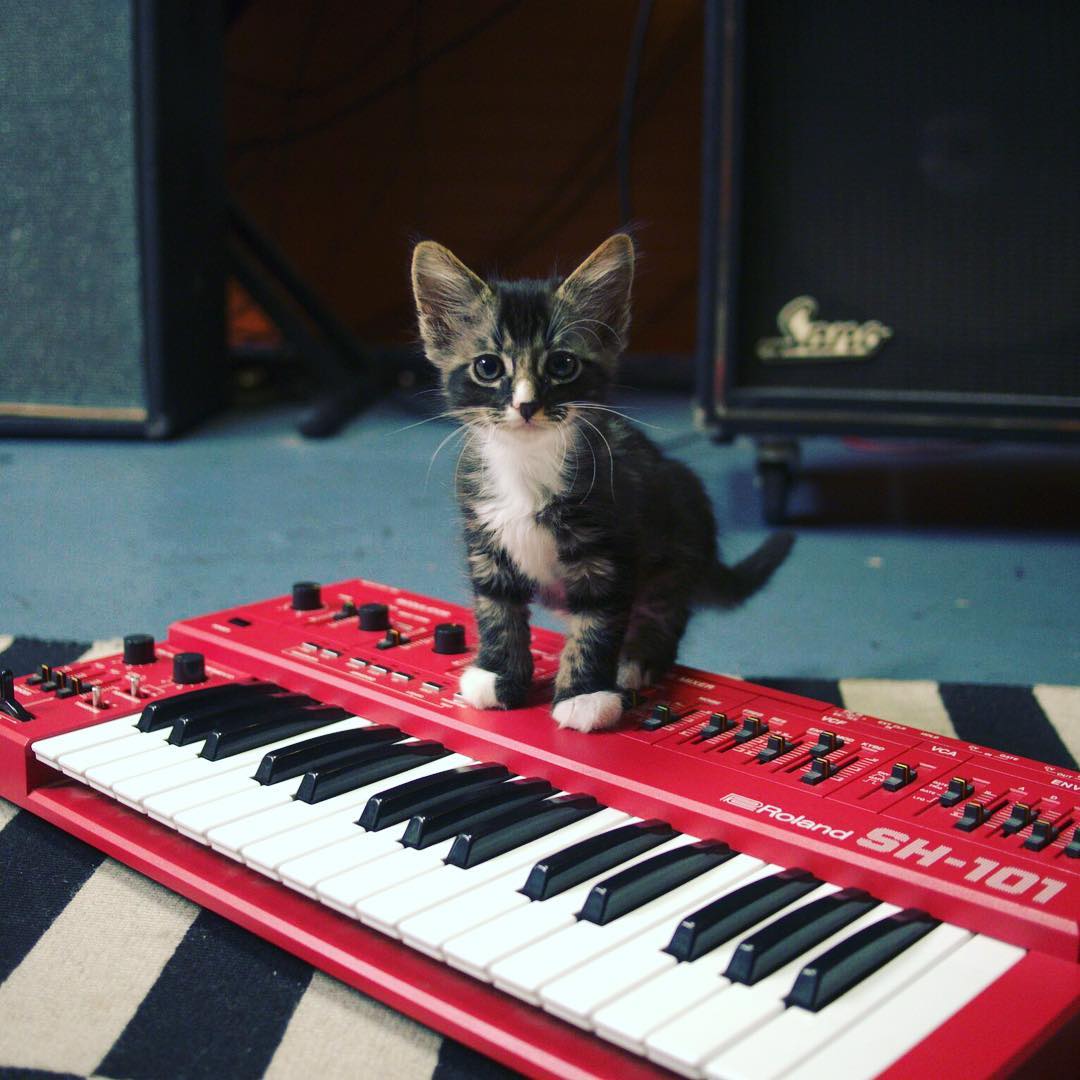
Adorable kitten sitting atop a red Roland SH-101 synthesizer. From the Vintage Synthesizer Museum.
This cat wants to remind you that VSM is offering a hands-on Intro to Synthesis workshop on September 22nd. Contact us for details or to enroll.
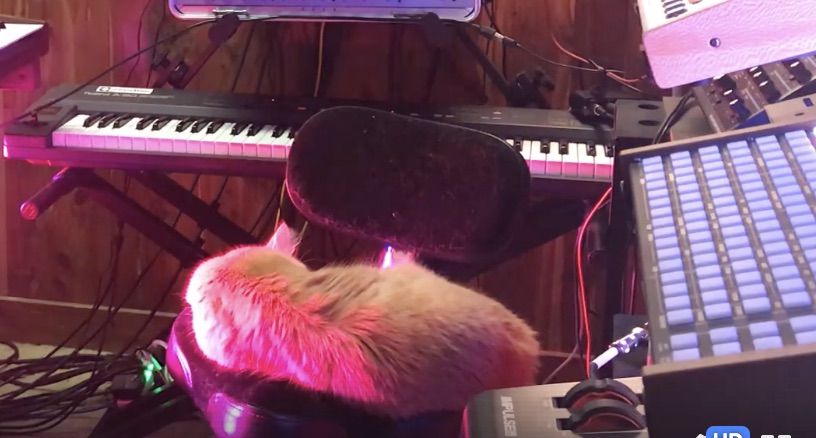
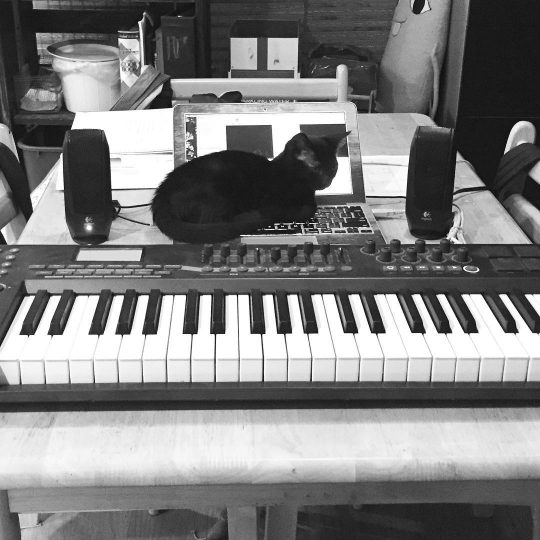
Mr. Maximillion chills in Charles Whiley’s updated studio.
Submitted by Charles Whiley via Facebook.
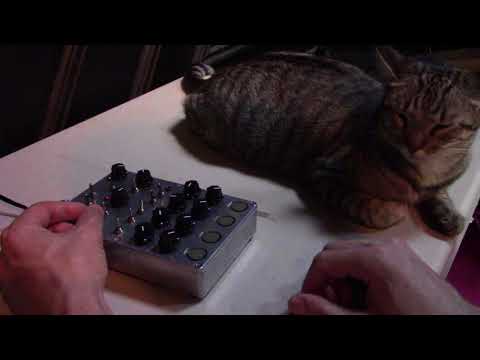
By electro-lobotomy on YouTube, via matrixsynth.
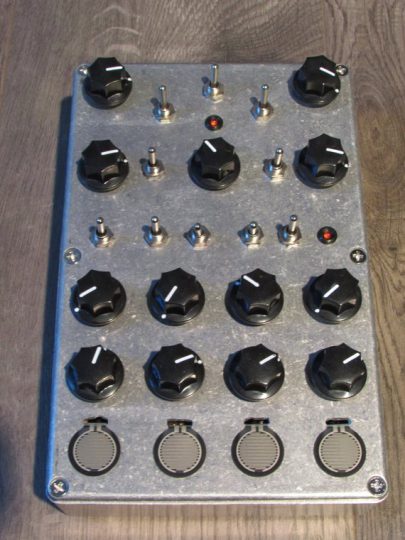
“The Particle Smasher + is a sound generator and sound processor. Please visit my etsy shop for more info..
https://www.etsy.com/shop/ElectroLobo…”
“Particle Smasher +
Sound Generator and signal processor. Experimental sound device with touch controls and a filter wave shaper section.Features:
* 2 Oscillators
* Modify switch for oscillator 1
* 2 Modify switches for Oscillator 2
* Power starve knob
* Choke knob
* 3 way variation switch
* Gain Knob for input
* Feed knob
* 2 feedback switches
* Effect bypass switch
* 1/4″ audio input
* 1/4″ audio out jack
* DC power jack ( 9v center = – // sleeve = + )*I will include a detailed diagram of unit and it’s functions.
**9v battery to DC jack is included. (Battery not included)
*The unit can also be powered with a 9v power supply with a negative tip.”

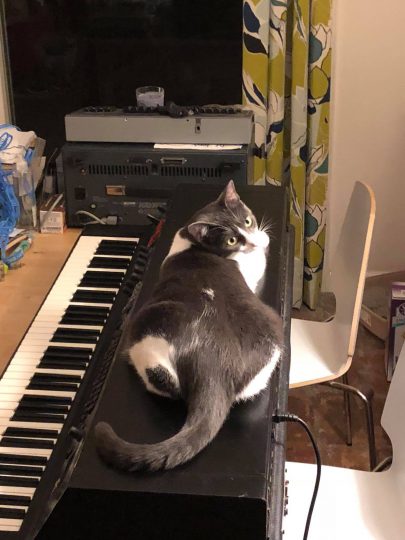
Gracie returns, atop a vintage synth whose identity we leave as an exercise to the reader 😸
By Alsún Ní Chasaide via Facebook.
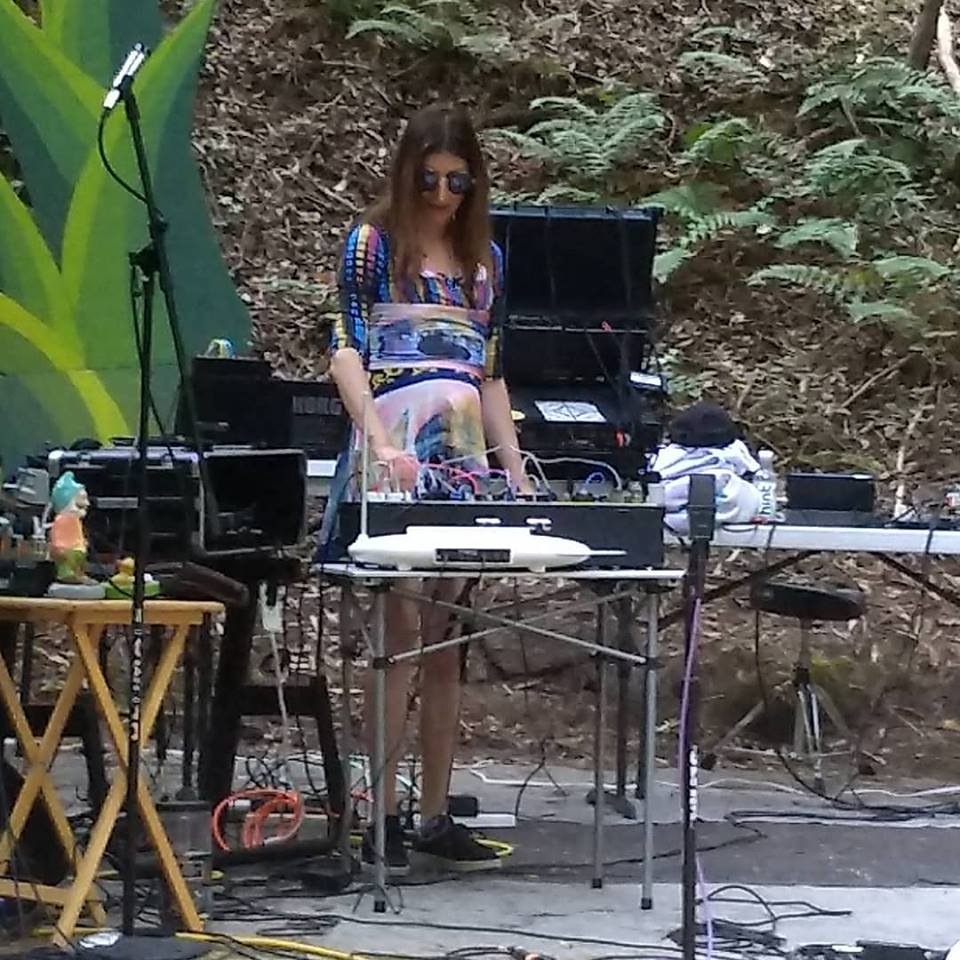
Today we look back at this year’s μHausen, a “micro-festival” of experimental electronics that takes place every summer deep at a secure undisclosed location in the Santa Cruz Mountains. It was the subject of our most recent CatSynth TV episode.
As suggested in the video, I was thinking a lot about our natural surroundings as we made music with our thoroughly artificial electronic instruments. The trees, the air, the light, all seemed to be of a piece with the music at times. I also thought about the fact that I had not been able to attend the last three installments. In 2015 and 2016 I had to cancel or decline because of medical issues, and I’m not sure what happened in 2017. But I was back now and was great to see and hear everyone.
First up was Peter Elsea, recently retired from his longtime position as a professor of electronic music at UC Santa Cruz. On this occasion, he performed with a small rig that included a modular synthesizer and an electronic wind instrument.
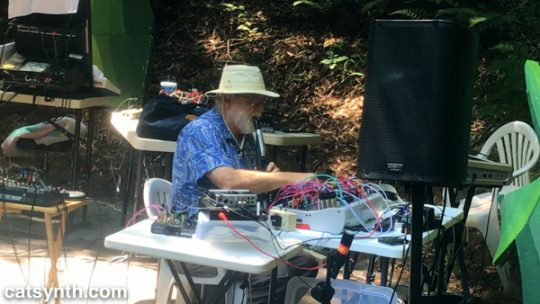
His set featured tones that were timbrally rich and often noisy, but still pitched. This worked well with the wind controller which allowed the noisy tones to swell and fade musically. But there were also some beautiful moments of quiet pure tones that evoked the natural surroundings.
Next up was Later Days, a project featuring Wayne Jackson with his iOS-based evolutionary synth MendelTone, which allows patches to “breed” and evolve.
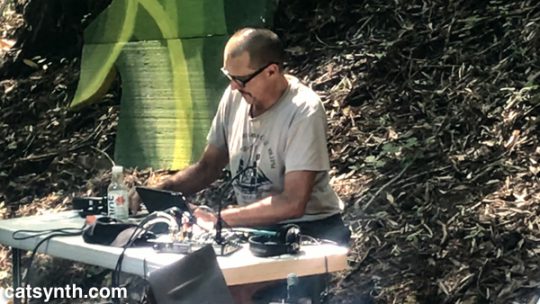
There was an urgent “machine-like” quality to the music, with low drones oms mixing with high swirls of sound and various percussive hits. Wayne is also the founder of this event and often its leader, but this year he ceded organizing duties to R Duck (of the R Duck Show), who performed next.
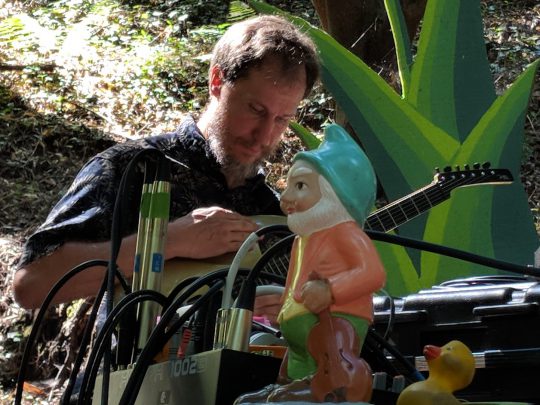
[Photo by Later Days (Wayne Jackson)]
The first segment of his set featured beautiful drones of processed guitar. There were quick runs, but they were absorbed into the overall sound. Over time, the tone and structure darkened, with more complex timbres and harmonies set against slow but anxious guitar riffs. He also teamed up with Later Days to deliver his perennial incantation featuring chocolate. (Did I mention that we at CatSynth love chocolate?)
Next up was synthesizer virtuoso Doug Lynner, who performed on a Eurorack-based Serge modular synthesizer.
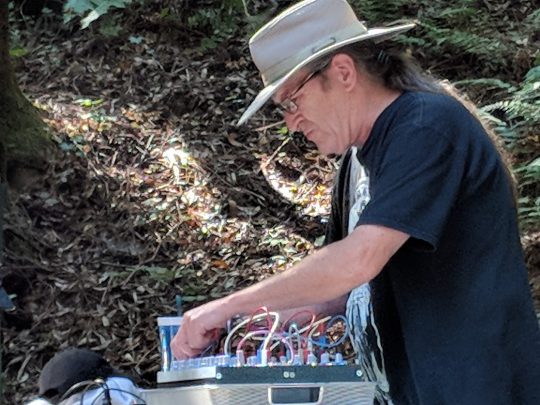
[Photo by Later Days (Wayne Jackson)]
I have long come to expect very complex and intricate sounds from Doug, often set in a very sparse texture where one can clearly hear the details. That was certainly the case in this performance, which opened with light sounds reminiscent of birds and whale songs. It could have come from the surrounding woods rather than the synthesizer on stage (OK, the bird sounds could have, probably not the whale sounds). After a period of rapid modulation, the music settled into a different pattern, with a contrapuntal texture of long ascending tones reminiscent of sirens.
Lynner was followed by Paul Nicholson who had a large Korg-centric rig that included both a Minilogue, an MS-20 and an SQ-1 sequencer among other instruments.
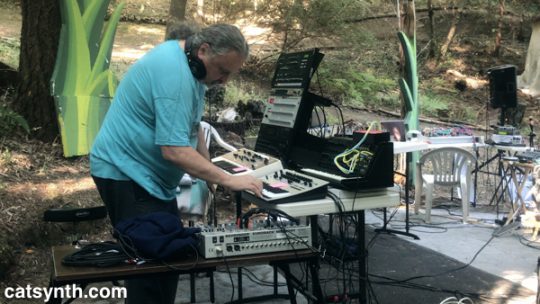
His opening piece was more traditionally harmonic compared to the preceding sets, with slowly changing harmonic patterns that evoked late-20th-century minimalism (think Steve Reich and John Adams). The second portion of the set featured some harsher sounds and noise centered around Nicholson’s modular synth.
Then it was time for me to take the stage. I brought a rig that included the large 9U modular, a Casio SK-1 and my trusty Moog Theremini.
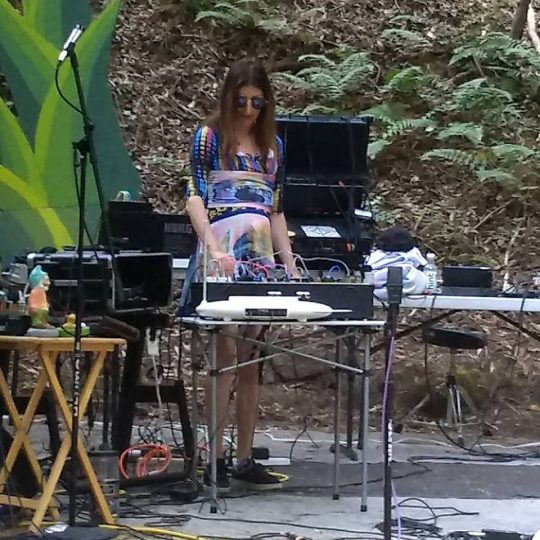
[Photo by R Duck]
As with most of my recent solo work, I select one of my more formal compositions as a point of departure. In this case, it was “White Wine”, with the melody set against one of the SK-1’s drum beats. This them morphed into a broken and complex break of sound and eventually to a pure improvisation with the modular and theremin, though the beats never really disappeared. As I was when listening to the other sets, I was thinking about the natural surroundings – in my case being the “city girl” mastering my place in space and sound, even if just for a few brief minutes.
The final set featured Lemon DeGeorge on harmonica and electronics.
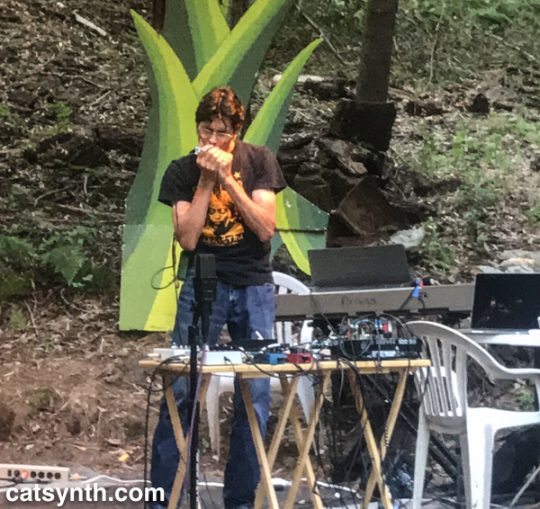
The harmonicas (like a true player of the instrument, he had more than one) added a unique dimension to the music, and the electronics followed with long breathy tones. The sounds appeared to build up layers upon layers into something heavy and enveloping, but never overwhelming. Compared to Nicholson’s sounds, DeGeorge’s lone tones and patterns were thoroughly inharmonic but no less beautiful or musical.
Overall it was a fine afternoon of weird electronic music in the woods, and not just for the music itself but for the fellowship with friends who I don’t get to see that often. I remained in the mind space of the show, the environment, and the sounds for a while on the drive back, at least until reaching I-880 and heading first into Oakland and later home to San Francisco, where I snapped back into my everyday urban life.
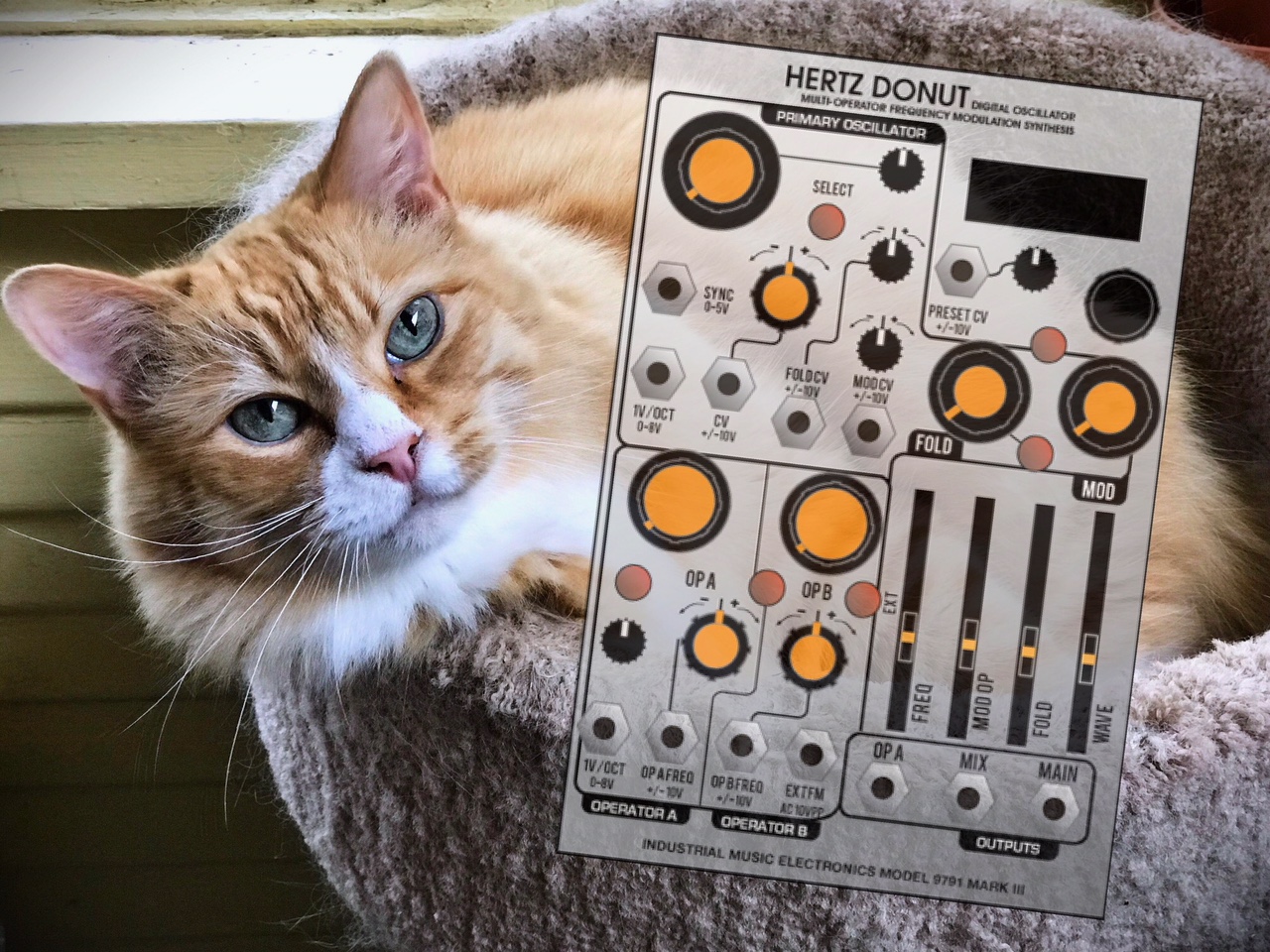
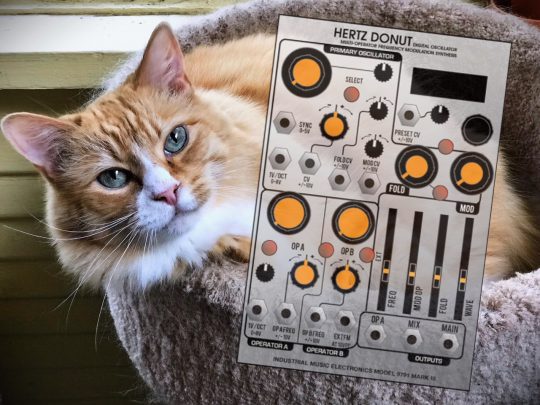
Cat with the latest version of the Hertz Donut module from Industrial Music Electronics (formerly known as The Harvestman). Seen on matrixsynth.
“Modular 8 presents Scott Jaeger, Saturday August 25, 1-5 PM! He will be showing off the brand new Hertz Donut Mk. III AND lecturing on Chiptune Synthesis.
Regarding the Hertz Donut MK3 demo 8/25 – @harvestman will also give a talk on chiptune history!
“I will lead off with a presentation about chip music ~30 minutes, then it gets into philosophy of square wave stuff, then probably seamlessly transitions into the HD3 demo.”
Sadly, this event is in the past, so we at CatSynth were not on hand. Hopefully, we will make it back up to Portland again soon…
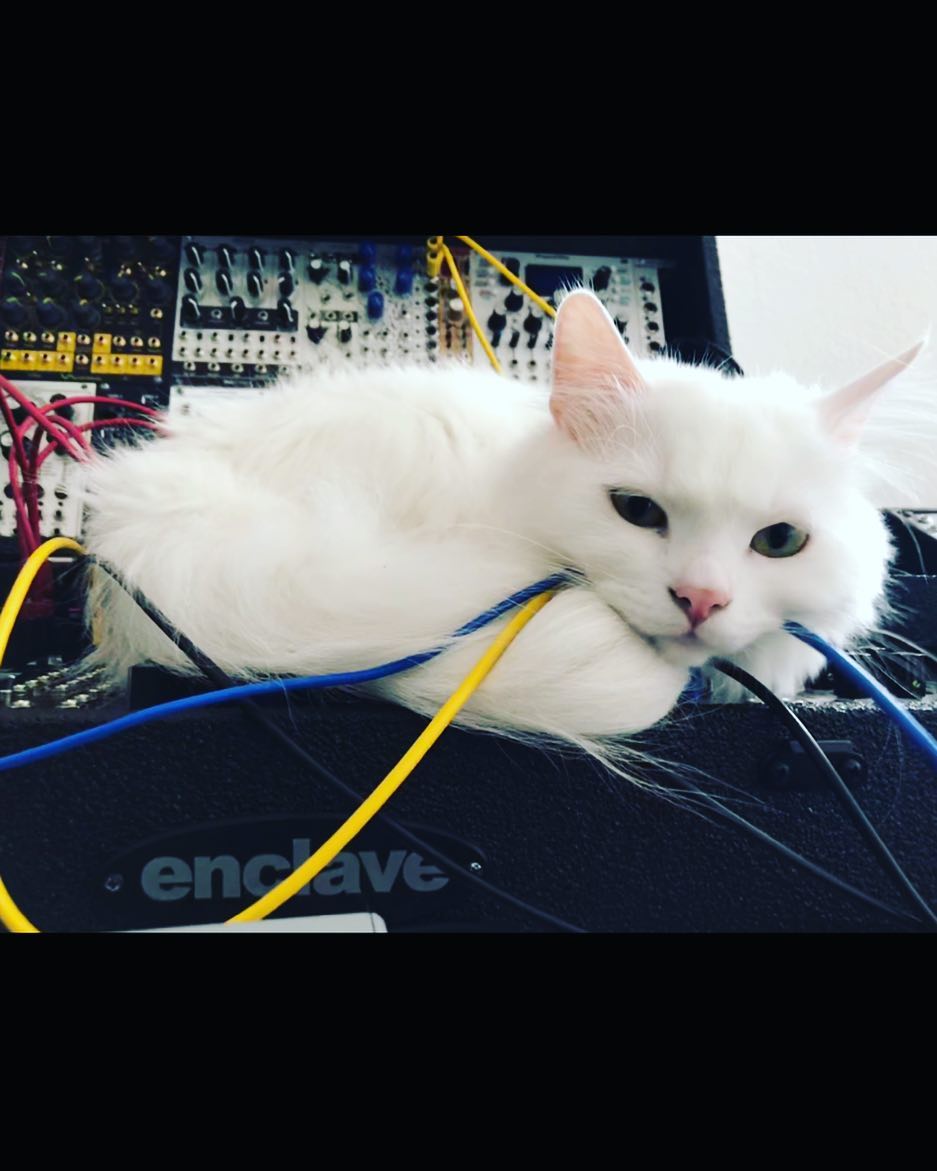
A fluffy white cat has gotten tangled up in modular cables 😸
From chichi_response on Instagram.
I am the only real Source of Uncertainty
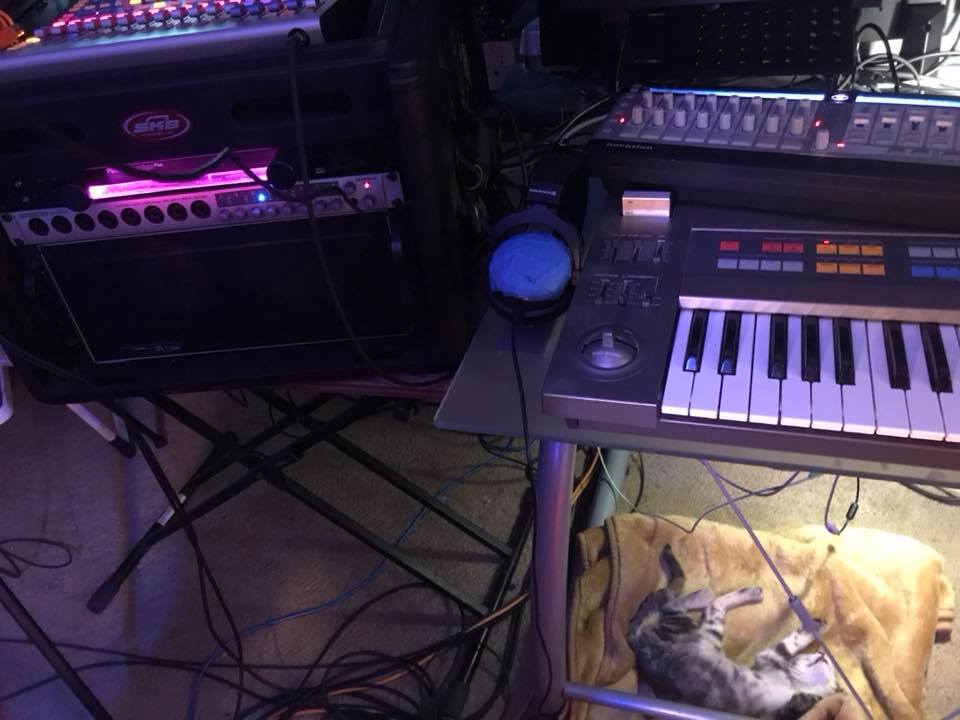
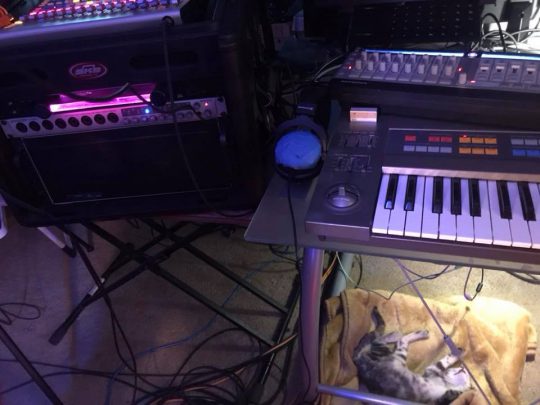
Miko, the newest member of Charles Whiley’s cat-and-synthesizer family, finds her place in the studio.
Miko has found her chill spot in my studio.
😽
From Charles Whiley via Facebook.
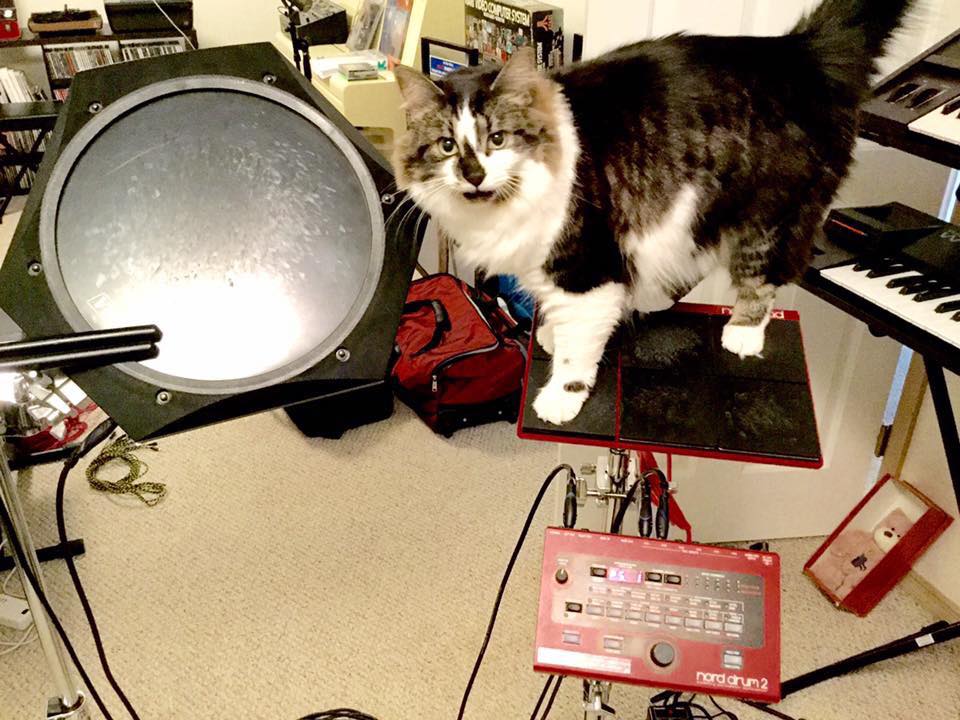
Our friend Dahlia returns, this time atop a Nord Drum 2. We also see sundry electronic percussion, keyboards and more.
From Rob Robinson on Facebook.
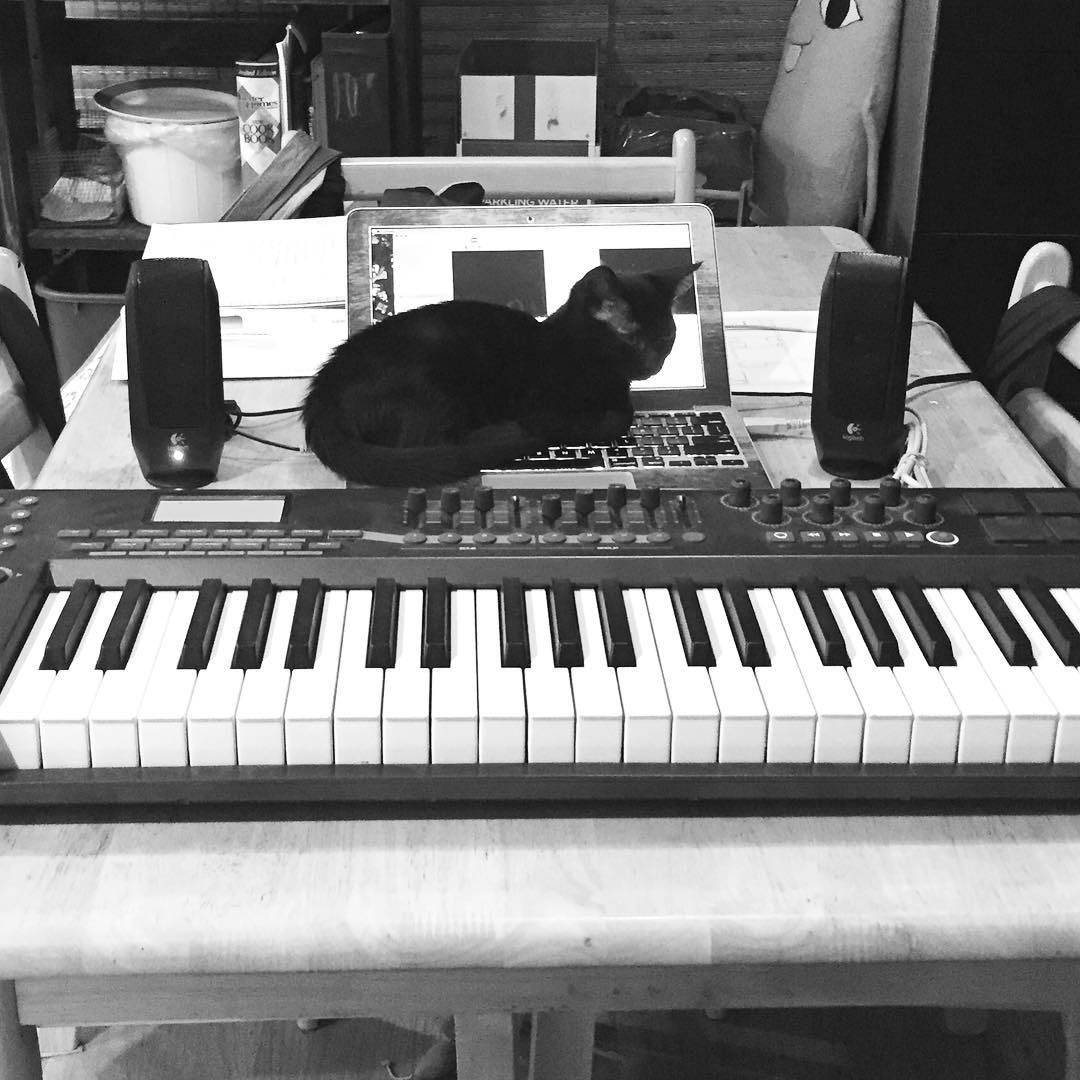
Remember Pearl? She was a foster synth cat living with frequent contributor Anne Corwin. But she is a foster no more, as stated in this Instagram post.
Well, this one is officially our first foster fail. Welcome to the family, Pearl! #blackcatsofinstagram #catsynth#kittensofinstagram
Congratulations to Pearl on her new home. We look forward to more CatSynth Pics 😺