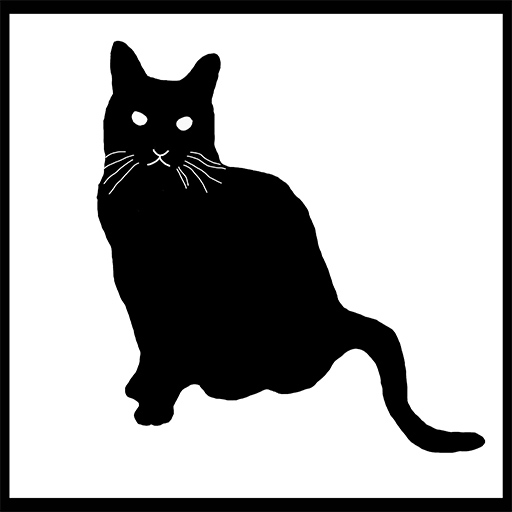
KATOD – Haunted (official video)

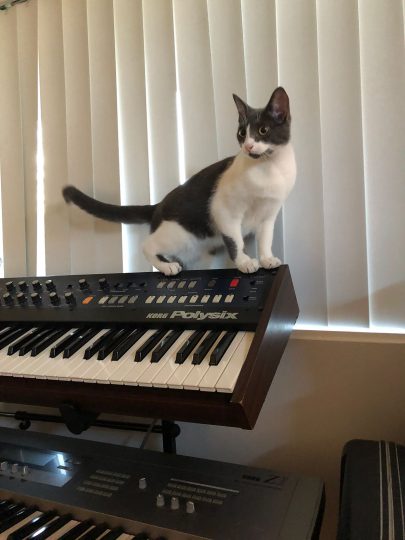
Szarik that cat returns in this video from From KATOD’s upcoming album. via our Facebook page.

HQ audio: https://katodmusic.bandcamp.com/track/haunted-single
Track from new, upcoming album (2018)
used instruments:
– Yamaha DX7
– Ambika synth
– electric guitar Jackson DK2S
– drums played on pads and written
– Atari 1040ST (as MIDI sequencer)

Written & directed by Mariusz Wasilewski
Cast:
Girl #1 – Daria Cieniak
Girl #2 – Iwona Szylin
Boy #1 – Konrad Domaszewski
Boy #2 – Jakub Gryzowski
Cyborg cat #1 – Kamila Górka-Czarska
Cyborg cat #2 – Ilona Baran
Cat – Szarik cat
Camera operators: Stanisław Patejko, Mariusz Wasilewski, Marcin Czerwienny, Tomasz Kowal, Artur Tymański
Edited by Mariusz Wasilewski
Music performed by KATOD(Mariusz Wasilewski) – “Haunted” track from upcoming album (2018)
Make up & stylist, Catering & drinks – Sylvia Katarzyna, Kamila Górka-Czarska
Special thanks:
Mateusz Raginia (Fiat 125p owner), Sebastian Tawgien (VW Golf 1 owner), Krzysztof Grudziński (Taxi driver & help)
Produced by Mariusz Wasilewski

There is definitely a 1980s theme in the aesthetic as well as the instrumentation 😺

Sam Sam’s First Gotcha Day!

It was one year ago today that Sam Sam came to live at CatSynth HQ, and we are wishing her a very happy first Gotcha Day (adoption anniversary)!

A year ago I was still in the early part of my grieving process for Luna, who had passed away just a little over a month earlier.  Getting another cat was always the plan, but not quite so soon.  But our friends Michael de la Cuesta (of Vacuum Tree Head) and Karen de la Cuesta told me about this sweet cat they needed to rehome – her longtime human had passed away a year earlier, and she needed to leave her current home in southern California.  I, of course, said yes.  So on December 7, 2016, she made the journey north to San Francisco and stepped in HQ for the first time.  Not surprisingly, “Sam Sam” was a bit shy and skittish at first, spending most of her time under the bed, sneaking out periodically for food, water, and the litter box.  But bit by bit she came out her shell and blossomed into a wonderful companion.  She is quite talkative and outgoing now – even a bit sassy at times 😸

She delights many with her unique markings and quirky antics.

Happy Gotcha Day, Sam Sam!  We are so glad you came to live with us, and we hope to spend many years together 💕

Fun with Highways: Gadsden, Alabama

Alabama remains a somewhat mysterious place to us at CatSynth – it’s one of only six states I haven’t yet visited. We did take fellow readers on a virtual drive of the state during our 2012 Primary Highways series. Today our virtual trip heads north from Birmingham on I-59 towards the town of Gadsden, Alabama.

Gadsden is the largest town in and the county seat of Etowah County and has a population of about 35,000. To put this in perspective, it’s a little over half the size of Santa Cruz, California, where CatSynth began. But unlike Santa Cruz, Gadsden boasts its own Interstate highway, I-759. It begins at an interchange with I-59 west of town and then crosses a long causeway of a wide section of the Coosa River before ending a junction with US 441 and Alabama State Route 759.

US 441 (Rainbow Drive) continues northward along the Coosa River, passing by the revitalized downtown area bere a junction with US 431 and US 278. It now includes galleries, boutiques, institutions like the Gadsden Museum of Art and the Mary G. Hardin Center for Cultural Arts, and a park along the Coosa River.  The museum has a current exhibition Intersection from Highway 90 that looks quite interesting.

Image result for gadsden art museum Mary G. Hardin Center for Cultural Arts
[Mary G. Hardin Center for Cultural Arts]


[Spirit of American Citizenship Monument along Coosa River. By Prestinian at en.wikipedia (Transferred from en.wikipedia by Ronhjones) [Public domain], via Wikimedia Commons]

Heading back south on US 441 to the interchange with I-759, we come to an altogether more pedestrian institution, the Gadsden Mall. The mall itself seems like a bit of a throwback to the 1970s and 1980s, with textured concrete siding that doesn’t quite rise to the level of brutalism; and with Sears (Sears?!) as an anchor along with Belk, a southern department-store chain. The mall is now somewhat infamous as the haunt of a certain Etowah County assistant district attorney named Roy Moore, who was known by locals to cruise the mall for teenage women, leading to what was at least an informal ban from the mall (or as one victim put it “he was run off”).

Reading the stories of the women in this New Yorker article and AL.com are chilling, and our thoughts are with the victims who told have come forward to tell their stories. This guy is at the very least a serious creep, and worst a serial pedophile and sexual predator. But the other thing that baffled me in both articles was how this was an open secret of sorts in Gadsden. People know about and clearly disapproved of his behavior. So how did he rise from local creep and pedophile to the Chief Justice of the Supreme Court of Alabama twice? Why didn’t the people of Gadsden warn the rest of the state about him?

Looking back at Moore’s electoral history, he did face scrutiny and lost multiple elections, including for County Judge and later for Etowah County District Attorney. It was only several years later that he was appointed to the circuit-court seat he had earlier lost. Again, one wonders how he passed the background checks. But with the power of incumbency and his fiery extreme-Christian rhetoric, he was able to the gain election to the seat and eventually to the State Supreme Court, where he was removed twice for defying court orders in the name of his extreme brand of religion.

It is the last point, his extreme theocratic views on religion as law and his bigotry towards just about anyone who doesn’t share his beliefs, especially to the LGBTQ community and even towards Jews, that made him abhorrent long before the charges of sexual abuse and predation arose. The charges should alarm those who claim to share his “Christian” beliefs, but if anything it seems to have had the opposite effect, with some doubling down in their support in that siege mentality that seems to be universal among the religious right as well as many white nationalists and supremacists. Like Trump, he has become a symbol for the inchoate rage in many communities across the country.

I know the last thing the people of Alabama want is some liberal Jewish New Yorker telling them what to do or how to vote. I do hope they do make the right choice and reject this man who is so awful in so many ways from representing their state. Regardless of the outcome, I am sincere in my desire to hopefully visit Alabama soon, explore and play some music shows. Any leads or suggestions in this regard are welcome!

See more of Gadsden Alabama and many other fine towns across North America in our Highway☆ app, available on the Apple App Store and Google Play Store.

Highway☆ on Apple App Store .   Highway☆ for Android

Ai Weiwei: Good Fences Make Good Neighbors, New York

This fall and winter in New York featured an ambitious citywide art project by Ai Weiwei called Good Fences Make Good Neighbors. Through fences, cages, netting and other forms of “barrier”, Ai Weiwei well-known landmarks as well as quintessentially “New York” locations into expressions of global migration – a complex phenomenon that includes refugee crises around the world as well as the fights for and against immigration in our own country. While the large installations at Washington Square and Central Park perhaps get the most attention, they are also scattered in smaller locations that are part of daily life in the city. We at CatSynth attempted to track down all the major installations and compiled our experiences into this video.

The large sculptural pieces in Washington Square Park and Grand Army Plaza at the corner of Central Park were the most impressive as iconic.


[Grand Army Plaza / Central Park]

The cage at Grand Army Plaza is quite literal, an easily identified barrier between those in the cage and the rest of the city going about its business outside. Of course, one can freely enter and exit this cage at will. The mirrored piece that fills the Washington Square Arch is more abstract, with the silhouettes of human figures forming a welcoming portal in the midst of an imposing fence. This one was the most aesthetically beautiful for me, with its play on reflections and light from the surrounding city.


[Washington Square Arch]

Many smaller installations were scattered around the Lower East Side of Manhattan, a neighborhood long associated with immigration and new arrivals to the United States. Indeed, the European Jewish side of my family settled in this neighborhood in the early 20th century, so it holds particular significance.


[Chrystie Street]

Ai Weiwei. #goodfencesmakegoodneighbors #NYC Essex Street Market

A post shared by CatSynth / Amanda C (@catsynth) on

One could be forgiven for overlooking some of these (though the Essex Street Market installation is quite large). In fact, one at East 7th Street was just a narrow fence in the space between two apartment buildings. It took me a couple of minutes to locate it. And business at the boutiques and cafes at ground level went ahead seemingly oblivious.

We also made it to some of the installations in other boroughs, including the one surrounding the Unisphere in Flushing Meadows Corona Park in Queens.


[Unisphere – Flushing Meadows Corona Park, Queens]

The Unisphere is one of the remaining ruins from the 1968 Worlds Fair and with its positive (albeit cynical) message of global and international solidarity, its an apt setting for reflecting on the current migration crises and increasing nationalism worldwide. The borough of Queens has also involved since 1968 to become one of the most diverse places in the world.

And no artistic journey through the would be complete without Brooklyn. Fulton Mall – a section of Fulton Street closed to form a pedestrian mall and bus corridor – was the site of a series of installations adding fencing to some of the bus stops.


[Fulton Mall, Brooklyn]

One more Fulton Street Mall. Ai Weiwei #goodfencesmakegoodneighbors #brooklyn #NYC

A post shared by CatSynth / Amanda C (@catsynth) on


Downtown Brooklyn has become an important part of my own experience of New York in the past decade, and it seems fitting to end here, where older discount stores and new high-rise condo buildings collide. We will have to see how this ultimately plays out…

We end in the Bronx, where this billboard on the Deegan Expressway may not be part of the official presentation, but it made for a fitting conclusion.


[Deegan Expressway (I-87), The Bronx]

Ai Weiwei: Good Fences Make Good Neighbors will be on display through February 18, 2018. You can read more about the project and its many locations here.

Louise Bourgeois: An Unfolding Portrait, MoMA

For us at CatSynth, no trip back to New York is complete without a visit to the Museum of Modern Art (MoMA), and this time it was an exceptionally rich one, with interesting exhibitions on every floor even amidst the museum’s massive renovation project.  We begin with a look at an exhibition of prints by Louise Bourgeois that focused on her print-making work.  Although primarily known for her sculptures, Bourgeois produced a large body of printed works on paper, textiles and other materials, especially at the beginning and end of her career.  But the themes and characteristic elements remain similar regardless of medium, and the show placed the printed works in the context of her sculpture.  For example, the main atrium of the museum was dominated by one of her large iconic spider sculptures, with late-career prints surrounding it on the walls.

Louise Bourgeois: Spider
[Louise Bourgeois.  Spider (1997)]


[Installation View]

The prints in the atrium featured curved, organic forms, in keeping with the same natural focus in the spider and many of her other sculptures.  We can see this synergy between print and sculpture throughout the exhibition, with early prints and drawings informing her sculptures of the 1950s and 1960s, which combined geometric and architectural elements with organic shapes and textures.

Louise Bourgeois: Femme Maison
[Louise Bourgeois.  Femme Maison (1947)]

Louise Bourgeois: Pillar and Figure
[Louise Bourgeois.  Pillar  (1949-1950) and Figure (1954)]

The vertical nature of the forms enhances the sense of embodiment in the sculptures, while drawings like Femme Maison (shown above) make the connection literal.  Bourgeois revisited these same themes in many of her later prints, perhaps even drawing upon the earlier sculptures themselves for inspiration.

The Sky's the Limit
[Louise Bourgeois.  The Sky’s the Limit, version 2 of 2, only state (1989-2003)]

In addition to the intersection of architectural and biological forms, Bourgeois’ work often explores themes of womanhood, fertility, and sexuality. Indeed, the 1947 Femme Maison combines all three themes.  On particularly poignant series from the 1990s, late in her life, revisits motherhood embodied in Sainte Sébastienne (presumably a gender switch of the early Christian martyr Saint Sebastien).  Childbirth and pain come together in the first more literal series of images, but there is a softer element to the second series, which includes this image combining the maternal figure with a cat.


[Louise Bourgeois.  Stamp of Memories II, version 1 of 2, state XII of XII  (1994)]

Sexuality comes through abstractly in many pieces, but quite literally in some late-career drawings which have a playful, comic-like quality, as in this page from her illustrated book The Laws of Nature.


[Louise Bourgeois and Paulo Herkenhoff.  Untitled, plate 2 of 5, state X of X, from the illustrated book, The Laws of Nature (2006)]

Bourgeois celebrated both the female and male while turning some of traditional roles and stereotypes on their head.  In the above image, it is the woman who appears to be in control in the sexual moment, with the male figure more passive.  Another particularly amusing riff on gender stereotypes is her sculpture Arch of Hysteria in which a suspended male torso is used to represent “hysteria”.

Art of Hysteria
[Louise Bourgeois. Arch of Hysteria (1993) and installation view.]

Having been on the receiving end of “why are you being so emotional?” comments in the workplace, I rather enjoyed seeing this stereotype turned around.

We conclude with one last piece from the Lullaby series in which a simple red organic form is printed on sheet-music paper.

Untitled, no. 11 of 24, only state, from the series, Lullaby 2006
[Louise Bourgeois. Untitled, no. 11 of 24, only state, from the series, Lullaby (2006)]

Like the drawings from The Laws of Nature, these were done towards the end of the career.  I thought it was interesting that she chose music paper as the foundation for this series.  And for us at CatSynth, it allows us to circle back to music, which permeates our experience of art.

Louise Bourgeois: An Unfolding Portrait will be on display at the Museum of Modern Art in New York through January 28, 2018.  You can find out more information here.