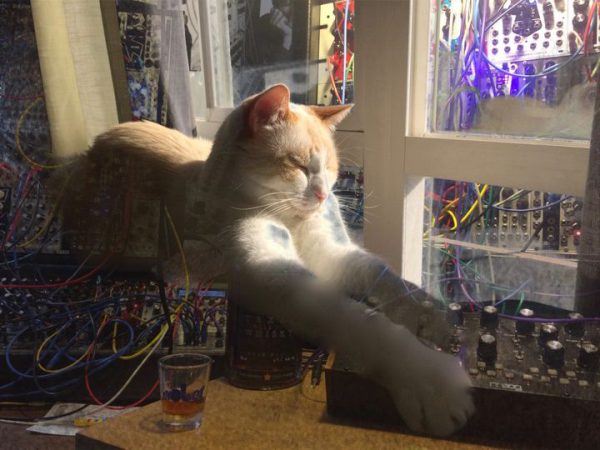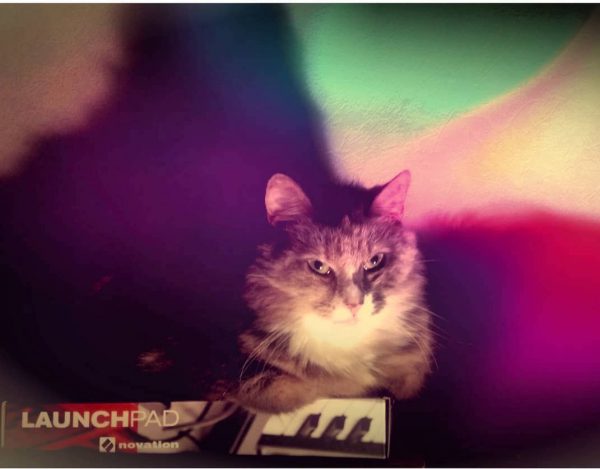
We conclude this week with another beauty. This cat poses with a Novation Launchpad in a bath of colorful psychedelic lights.
From animalsarebeauty via Instagram.

We conclude this week with another beauty. This cat poses with a Novation Launchpad in a bath of colorful psychedelic lights.
From animalsarebeauty via Instagram.
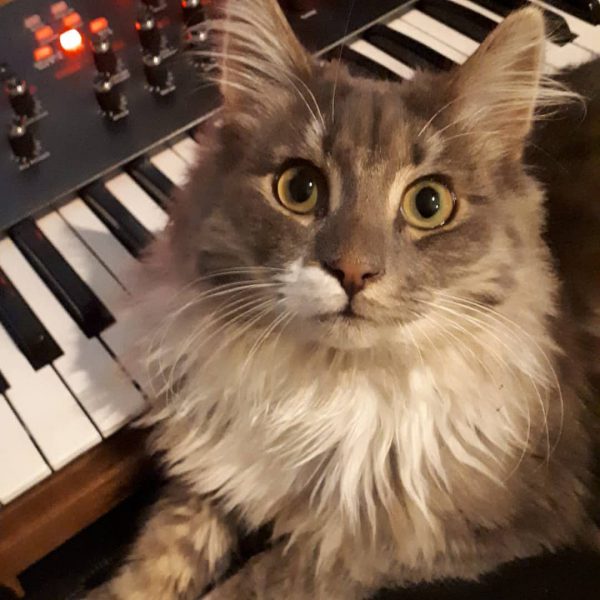
This handsome fellow is orion.s.cat on Instagram, and poses with what I believe to be a Sequential Prophet 12, a personal favorite of mine.
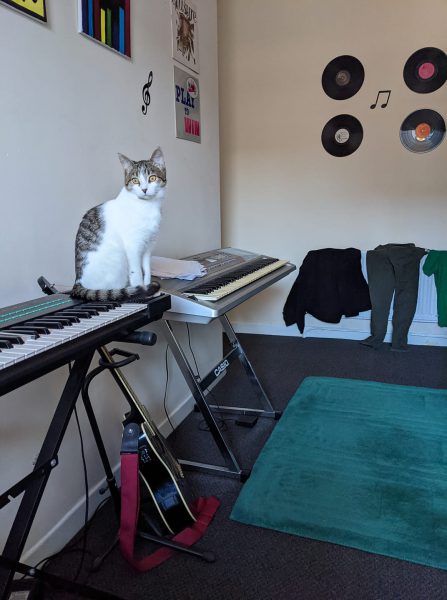
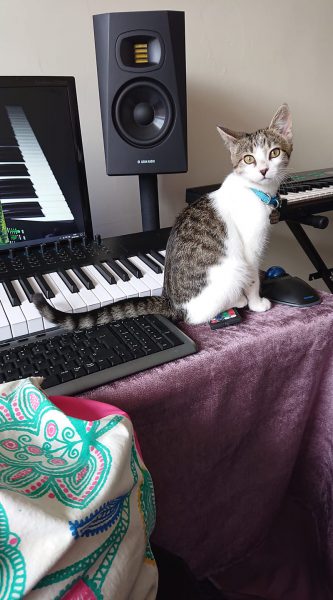
This new room is awsome, meow, I really love it!! There, I found a very strange toy… I don’t know what it is but his black and white buttons make sound when we push them, amazing 🙀😻!
My daddy call it a “synth” and it makes “music”! So I like to play music with my daddy! And you my furriends? Do you like to listen and/or play music with your humans?
Have a good night everyone!
https://www.instagram.com/p/CICFK19qcmF/
One from a treasure trove of performances on the Arturia MiniLab by cats Tony and Frankie on Instagram and TikTok. Listen to the accompanying mews in this one.
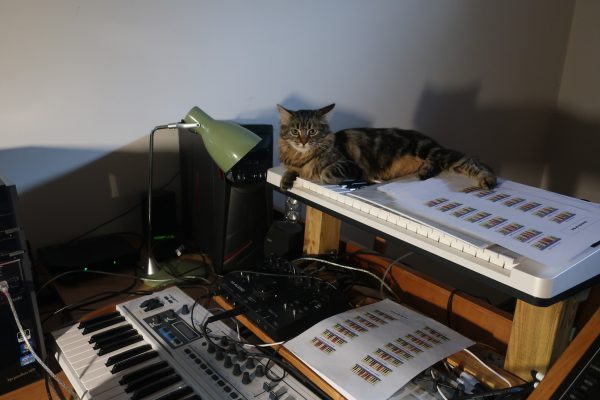
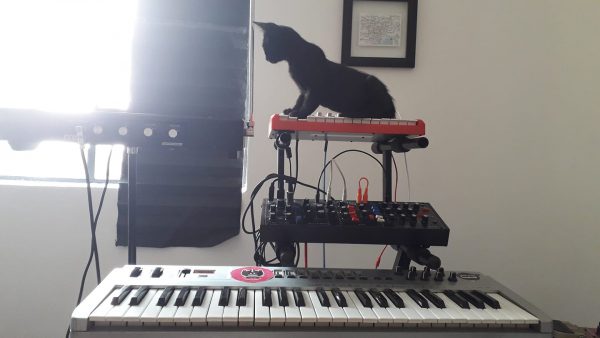
Cat sitting on a white keyboard, one of two in this studio. We see an Arturia Keylab 61 on the lower level, along with a BeatStep Pro (also from Arturia) and an M-Audio I/O. There are quite a few printouts for keyboard configurations and maps, which will surely come in handy for both human and feline 😸
From Pierre Rosique via Facebook.
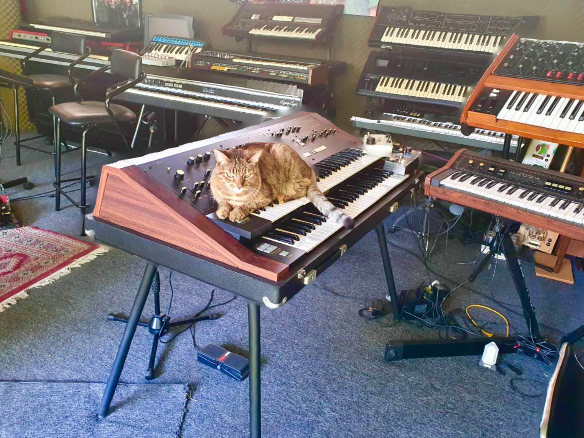
This cat holds court in an impressive collection of vintage synthesizers and sits on a Yamaha SK50D. We also see a Yamaha CP10, a Moog synthesizer, an electric piano in the back, and more! From Sai Barker via Facebook
She is enjoying the vintage synths. Happy Sunday! Greetings from Mexico.
We at CatSynth are also enjoying all the vintage synths. If you can identify any of the others in this photo, please let us know in the comments.