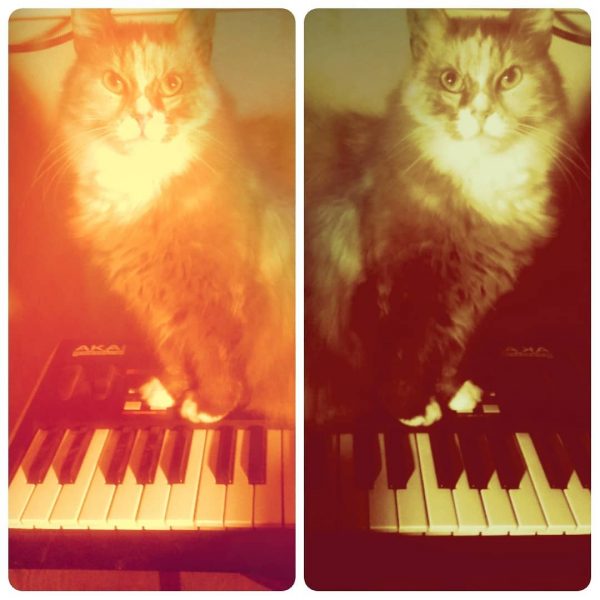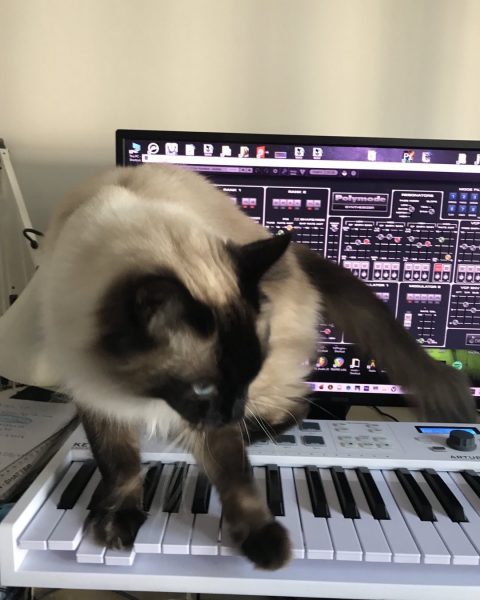
Monty (the cat) playing a Cherry Audio Polymode Synthesizer via an Arturia Keylab Essential. From kk_raggies on Instagram, where you can see more adventures of Max and two other ragdoll cats.

Monty (the cat) playing a Cherry Audio Polymode Synthesizer via an Arturia Keylab Essential. From kk_raggies on Instagram, where you can see more adventures of Max and two other ragdoll cats.
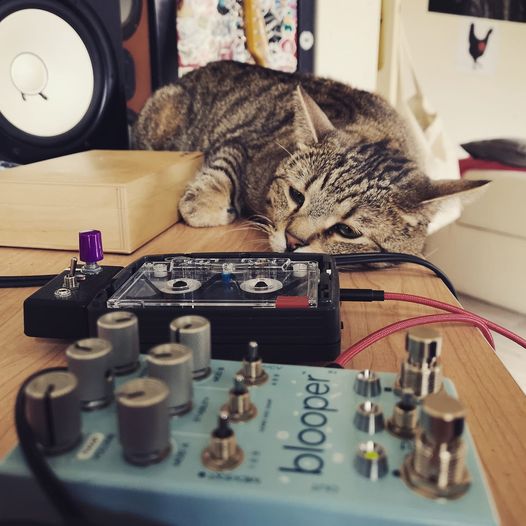
This cat is completely bilssed-out next to a Chase Bliss Blooper pedal and circuit-bent Walkman (speed controls). Between the cassette and the pedal, a lot of looping fun to be hand here.
From Antoine Marronclɘs via Facebook.
The Blooper is an intriguing little pedal, and looks quite practical for looping fun. From Chase Bliss’s website:
Within this little blue rectangle is an intricate machine to explore, unravel, and make your own, with infinite opportunities and outcomes…there is loop saving, eight layers of undo and redo, and external syncing. On the creative end, there are two channels of modifiers, a lo-fi Stability control, and three looping modes. blooper’s heart is Additive mode, which allows you to record sound modifiers directly into the loop like any other overdub.
https://www.chaseblissaudio.com/shop-pedals/blooper
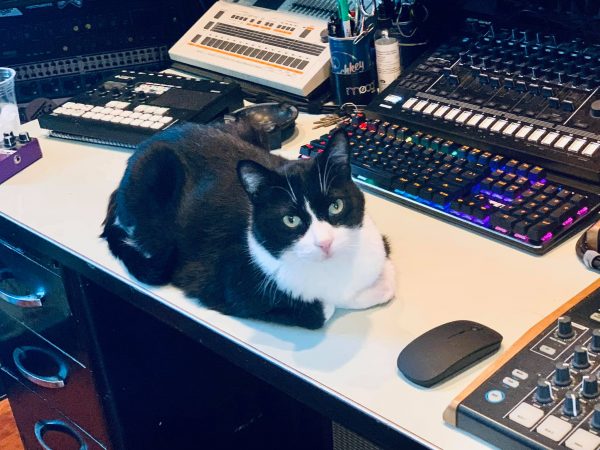
Sascha returns, with offerings from Roland (TR-707, TR-8s), Arturia (DrumBrute), and another device left as an exercise to the reader.
From Neil Parker of Space Kitty. You can see more photos of Sascha and the late great Blixa via their tags.
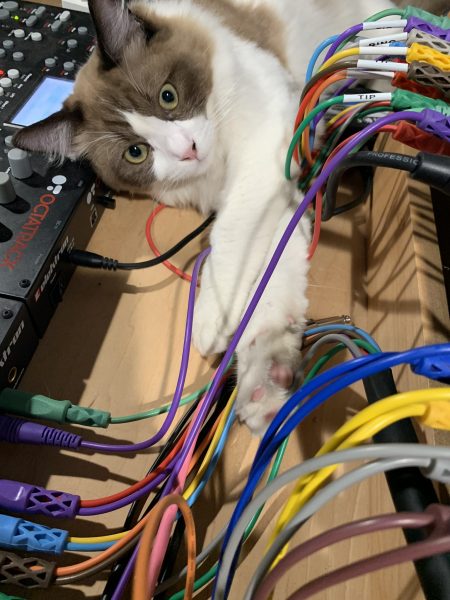
Valentino has found a comfy spot between an Elektron Octatrak (version 1) and a mixer. And it doesn’t look like he wants to move any time soon.
From Patricia Wolf @patwolfmusic via Twitter.
I guess I’ll have to work around him:)
Valentino looks even more like Big Merp than in his earlier photos.
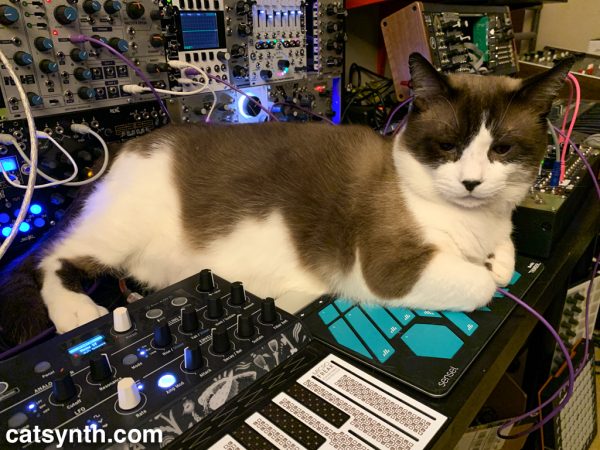
To see more of Valentino’s appearances on CatSynth, click here.
A cool hardware jam with offerings from Roland, Eletrkon, Nord, Behringer, Arturia, Strymon, and more. Watch for the cat about halfway through.
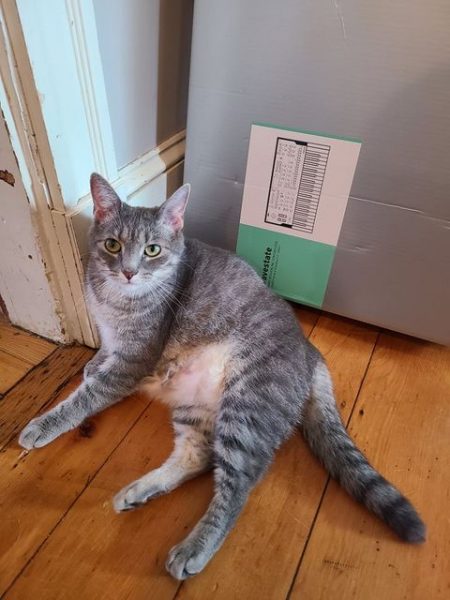
It looks like someone has already claimed the box for this brand new Korg Wavestate. Submitted by Matthew Pirata Kane via our Facebook page.
Just got a korg wavestate, and my cat already claimed it
The Korg Wavestate is a great little synthesizer, a reimagination of the Wavestation from the 1990s. You can see our NAMM 2020 report on the Wavestate below.
A beautiful cat with a serene drone pattern on the Volca Keys. From _daana_green via Instagram.
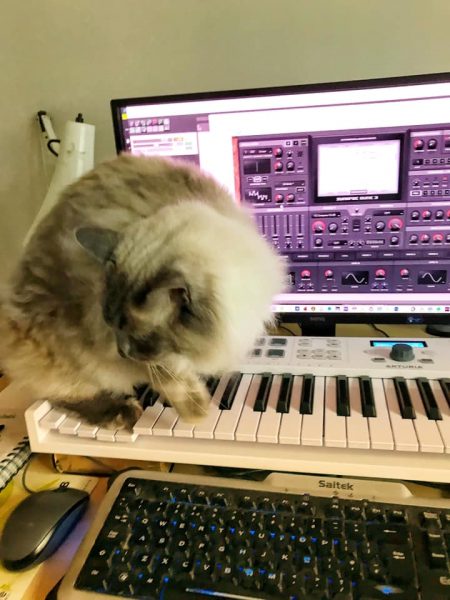
Max is testing out the new Dune 3 synthesizer from Synapse Audio. It appears he is using the Arturia keyboard to create some bass tones for the highly-touted wavetable oscillators in Dune.
Submitted by Julian Guffogg via our Facebook page.
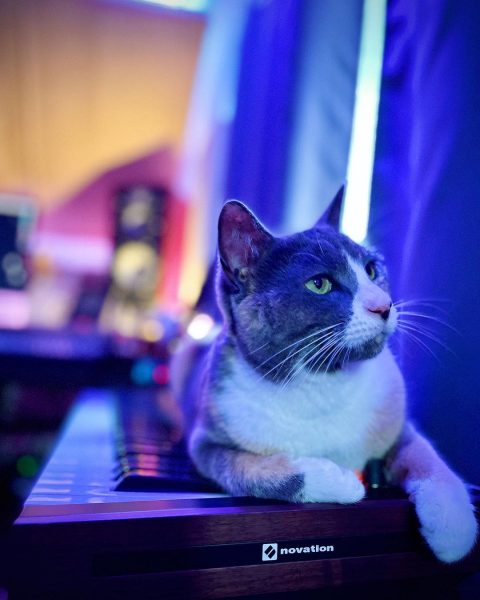
Our feline friend from Tiny Crush Mixing returns, this time sitting atop a Novation Summit synthesizer. (See what I did there?)
From hugoparismusic on Instagram.
What is the importance of collaborating in your creative process? ✨⠀
That is indeed an interesting question. I feel much of my creativity is solitary, and I do enjoy that. But I also collaborate in myriad ways. This was true even during the depths of the pandemic when I recorded an album with remote collaborators. And I do miss my band and duo performances.