One Trick Pony

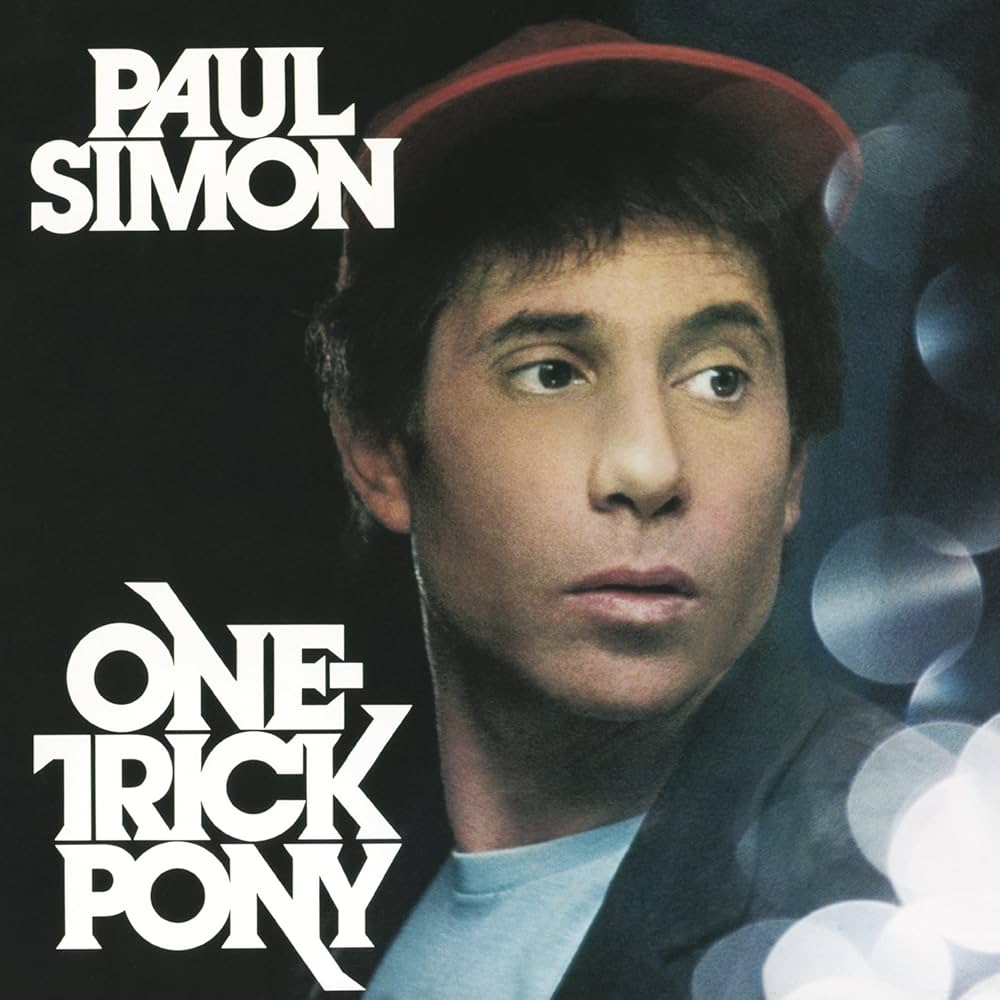
We recently watched Paul Simon’s 1980 film One Trick Pony here at CatSynth HQ. This was his one and only film, which he wrote and starred in. It follows a folk-rock musician Jonah Levin (Simon) who had several big hits in the late 1960s, including an anti-Vietnam War protest song, but now in the late 1970s, he and his band find themselves touring small venues, often riding in a small van around the Midwest, and opening for up-and-coming acts like The B-52s. At the same time, he is struggling with record executives on producing a new album, and with his estranged wife on their relationship and their son.

The film was a commercial and critical flop, and a bit of an obscure artifact of its time. But we at CatSynth really enjoyed it, and were a little confused as to why it was so panned. For one, it features an all-star band that included Simon, bassist Tony Levin (best known for his work with King Crimson), jazz guitarist Eric Gale, jazz and fusion keyboardist Richard Tee (who also did vocals), and drummer Steve Gadd. The original music was a lot of fun, including the bluesy title track played over a disco beat and the catchy “Ace in the Hole”; the band played live in venues like the Agora Ballroom in Cleveland, Ohio. We were rooting for Jonah and the band in their conflicts with the record company, including Lou Reed in his debut film role as a trendy record producer. And even though the studio sessions didn’t go the way they wanted, it was fun to watch the process of recording to tape, adding in strings and backing vocals, and reviewing the takes together.

And perhaps in this synopsis lies the disconnect with critics and mainstream audiences. It’s really a musicians’ film about musicians’ musicians. There was also the setting and the visuals, including life in New York City in the late 1970s, traveling along freeways, and music clubs on the outskirts of cities, all of which appeal to my own personal aesthetic. It also didn’t follow a traditional story arc, but joined mid-way and ended without a real ending, which again is something that appeals to me – recall my fondness for Michelangelo Antonioni’s “trilogy” (plus Red Desert). So while this film did not resonate with the mainstream, it did with us at CatSynth HQ, human and feline alike. We were the real target audience, 45 years after it was released.

Both the in-film story and the context surrounding it also make one think about one’s own journey, and the challenge of making “the music I want to hear” and the “films and videos I want to see”, and hoping others do as well. Sometimes one succeeds, sometimes a little less so. But hopefully one enjoys the work as it continues.

Sunday Newslettes are also on Substack. You can follow and subscribe to us there.

Wordless Wednesday: Three Windows

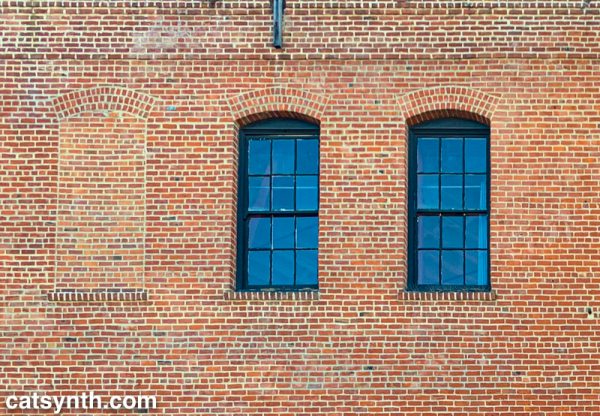
Three windows, one bricked. This is an old factory building at the base of Potrero Hill in San Francisco. More specifically, this is the location of Harry Caul’s workshop in the film The Conversation. The bricked window is where Harry’s desk was located.

You can see our detailed review and analysis of The Conversation in this video.

CatSynth TV Episode 99!

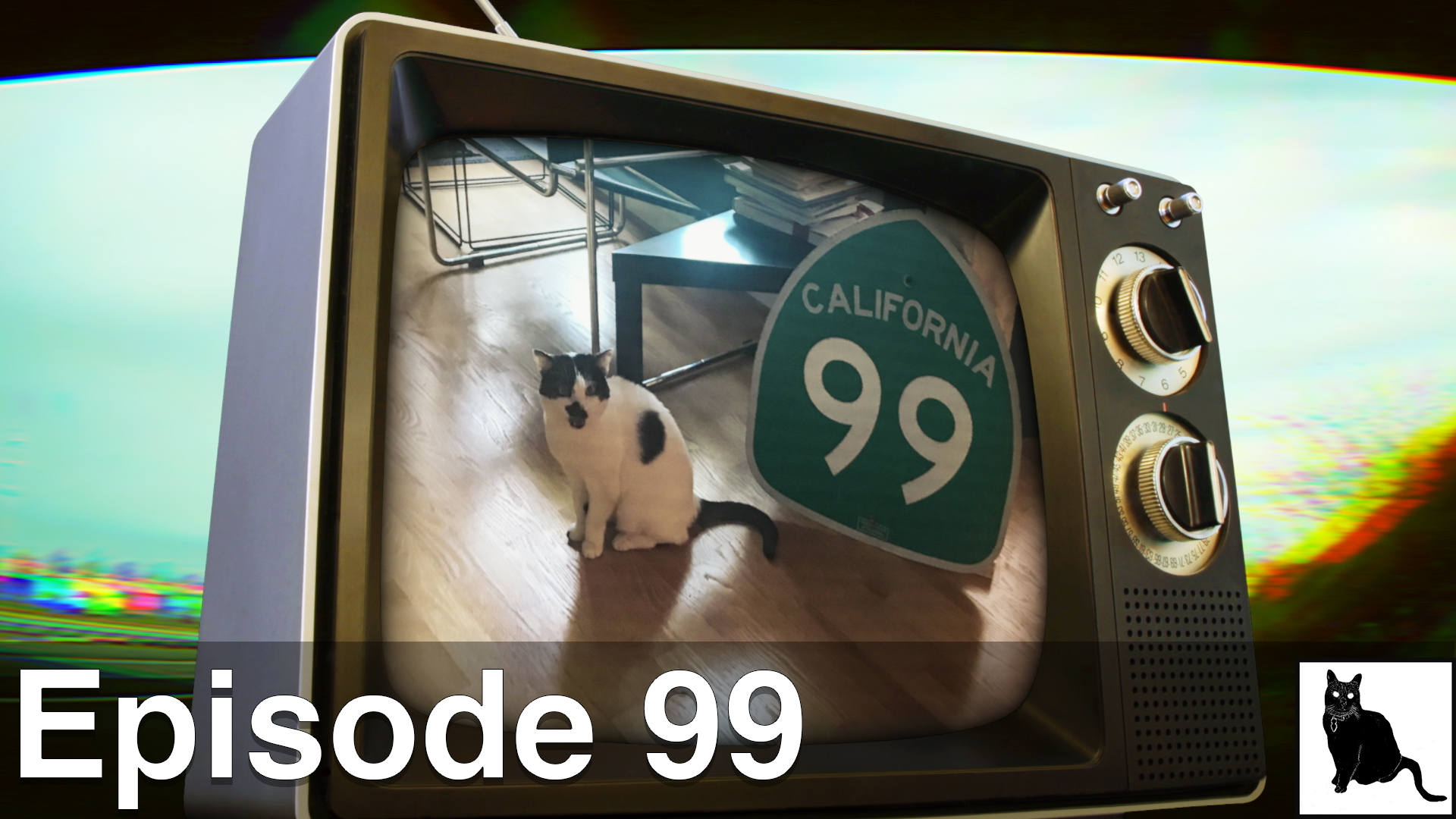
It’s the 99th Episode of CatSynth TV, and we have a special treat for all our readers and videos. It combines many of our interests: synthesizers, cats, experimental music and film, and highways.

Video shot along Highway 99 in California from Manteca through Stockton and heading towards Sacramento. Additional video and photography at CatSynth HQ in San Francisco.

Guest appearances by Sam Sam and Big Merp.

Original experimental synthesizer music by Amanda Chaudhary, based on melodies from “99 is not 100” by Moe! Staiano.

Synthesizers used:

  • Minimoog
  • Arturia MiniBrute 2S
  • Big Fish Audio John Cage Prepared Piano Sample Library (Kontakt)
  • Nord Stage EX
  • Mutable Instruments Plaits
  • Metasonix R-54 and R-53 2hp Cat module
  • 4ms Spectral Multiband Resonator
  • Make Noise Echophon

CatSynth Video: Chat écoutant la musique – Chris Marker

A CatSynth video from the great Chris Marker

https://www.youtube.com/watch?v=MrEHvDdEPrI

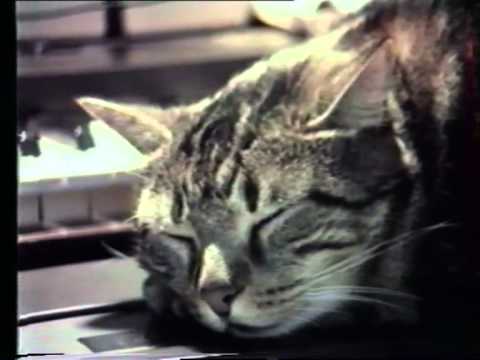
Marker’s cat naps peacefully atop a Yamaha DX7 synthesizer. From his collection Bestiaire aka Petit Bestiaire (1990), consisting of three ‘video haikus’:

We at CatSynth love Chris Marker’s film Sans Soleil.  It made an indelible mark on my thoughts about film and even inspired me to go find and visit the shrine dedicate to cats outside Tokyo that he featured.  You can read about that adventure here.

Club Foot Orchestra performs their Greatest Hits

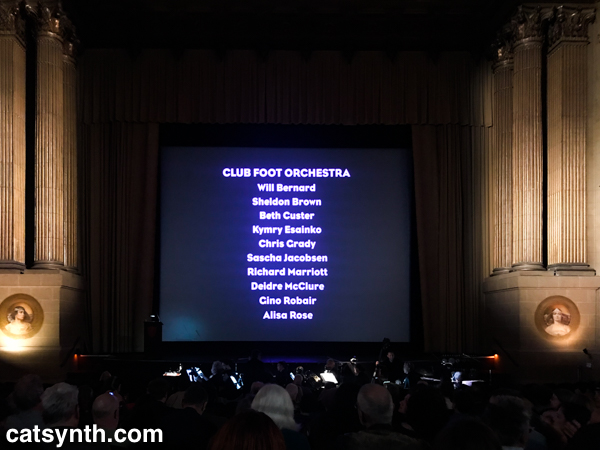
Last weekend the Club Foot Orchestra teamed up with the San Francisco Silent Film Festival, to perform some of their “greatest hits”, contemporary live performances to silent film classics.  A full day of live music by the venerable and indefatigable ensemble! 

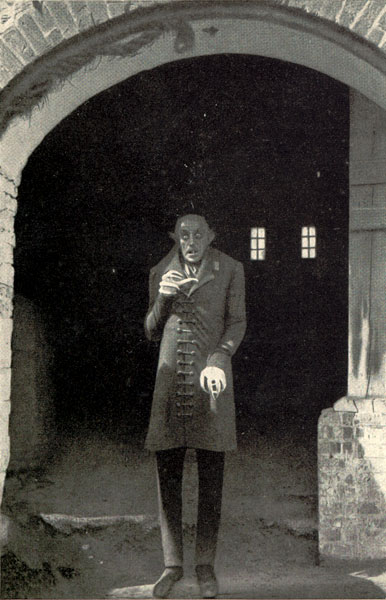
The Club Foot Orchestra was started 25 years ago in 1983 by Richard Marriott (brass, winds), and still includes original member Beth Custer on woodwinds.  They were joined in this performance by Sheldon Brown (woodwinds), Will Bernard (guitar), Chris Grady (trumpet), Gino Robair (percussion), Kymry Esainko (piano/keyboard), Sascha Jacobsen (bass), Deirdre McClure (conductor), and Alisa Rose (violin).   They performed some of their most memorable scores, including interpretations of the German expressionist classics Metropolis and Nosferatu.  We at CatSynth were not able to attend Metropolis, Fritz Lang’s futurist masterpiece and a personal favorite of mine.  But we were on hand for Nosferatu, the iconic and controversial horror film directed by F. W. Murnau and starring Max Schreck as the eternally creepy Count Orlock.

The history of Nosferatu is as intriguing as the film itself.  It was an unauthorized adaptation from Bram Stoker’s original Dracula, and although the names and some details were changed, in many ways it conforms more closely to both the story and spirit of the original than many later interpretations.  Perhaps too closely, as the Stoker estate successfully sued Murnau’s production company and won a judgment that included an order to destroy all copies of the film.  Fortunately, some prints had already been distributed internationally and have been used for restorations of the original.  The version screened on this occasion was a beautiful restoration from the 2000s that included color tinting for various scenes.  The colors added an even more eerie and otherworldly quality to the film.  It worked particularly well for the Transylvanian scenes and those in and around Orlock’s castle.

The orchestra delivered a highly dynamic and varied performance paired with the images.  There were many sparse sections that fit with the tension of the film, and I particularly liked the spots that featured single lines, such as percussion hits, extended-technique winds, or synthesizer samples.  But the sections where the ensemble came together to deliver punchy and sensuous jazz lines were especially fun.  It added an element of humor and modernism, which is inevitable for a twenty-first-century viewing of a movie from nearly 100 years ago.  The mixture of noises and extended sounds with bits of Eastern European melody and harmony worked especially well for strangely colored Transylvanian scenes.

As a small group, each of the wind players had multiple instruments.  Richard Marriott had a quite an arsenal of flutes and lower brass, and both Beth Custer and Sheldon Brown had bass clarinets in addition to their other instruments.  Gino Robair also had in an impressive array of percussion instruments (though no electronics on this particular occasion).

It was a delightful evening of music and visuals that worked well together – a more concrete film-centered version of the discipline we had a seen a week earlier in Andy Puls’ abstract set at the San Francisco Electronic Music Festival.  And while I’m sorry to have missed Metropolis on this occasion, Nosferatu was probably even more of an “event” in the space of the Castro Theatre.  We look forward to hearing more of Club Foot Orchestra’s scores in the near future.

Outsound New Music Summit: The Breath Courses Through Us

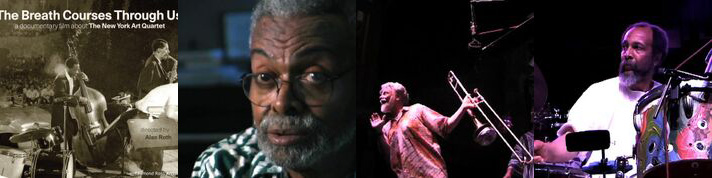
This past Monday, the Outsound New Music Summit featured a screening of The Breath Courses Through Us, a documentary by Alan Roth about the New York Art Quartet.  From the Outsound Summit website:

The Breath Courses Through Us” (2013) is a documentary film about the early 1960s avant-garde jazz group, the New York Art Quartet. The film focuses on the group’s 35-year reunion, while reaching back through their recollections of their foundations and innovative musical ideas. The year 2014 is the 50th anniversary of this group, and a revolutionary period in jazz music, which declared its existence in the October Revolution in Jazz, in October 1964. “The Breath Courses Through Us” mirrors the newly open improvisationary style of “free jazz” that subverted the traditional structure of jazz. Unfolding in free time and enveloped in their music, the film helps the viewer better understand the human element of the creative process, by focusing on their interactions in the present.

It was an interesting experience on multiple levels, as the structure of the documentary mirrors that of our musician- and band-focused CatSynth TV episodes, but on a larger scale.  It weaves interviews with members of the ensemble with archival footage, live performances from the early 2000s, and even scenes from a casual dinner among the members of the group discussing their music and plans for their reunion in 1999.  In many ways, the latter is the foundation for the history and interviews, and we keep returning to the dinner throughout the film.

Musically, it connects the current scene of free and avant-garde jazz to the creative foment of 1960s New York.  We hear from the founding members: John Tchicai, Roswell Rudd, and Milford Graves, along with one of the original bassists Reggie Workman and poet Amiri Baraka.  The five reunited for the early 2000s concerts as well as the documentary.  We get to hear their distinct personalities.  Tchicai brings a serious and brooding discipline, Rudd an exuberance and enthusiasm for playing, and Graves his quirky and humorous character. Workman was one of three bassists that performed with the group during its brief existence in 1964 and 1965; Baraka often read poems to the quartet’s improvisations, including his famous “Black Dada Nihilismus”, parts of which are included in the documentary.  It seemed like an improbable coming together that depended on a series of coincidences and connections, but together they informed a style and practice of music that was “revolutionary” in its time, and still in many ways sounds fresh.

Although the documentary has been out for a few years now, this was its first public screening on the west coast.  Hopefully, this will lead to future screenings.  Even immersed as I have been in the music influenced by the New York Art Quartet, I was not as familiar with them as I should be.  I think it will be a valuable experience for those who perform and listen to free jazz, as well as though who are new to it.

More information on the film, including screenings, can be found at the official website.

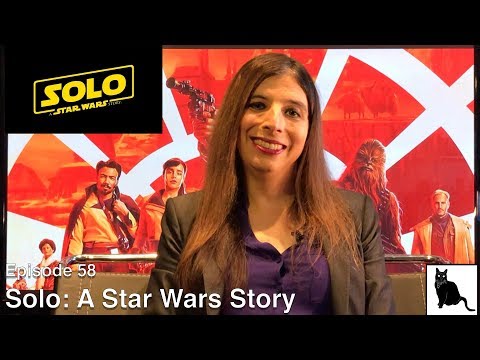
New Video Review of Solo: A Star Wars Story

Our latest CatSynth TV episode features a review of the latest offering in the Star Wars franchise, Solo: A Star Wars Story.

The video has some spoilers in it, so we advise waiting to watch it until you have seen the movie.  For now, here are some non-spoiler takeaways:

  • The movie continues to fill in the storyline between Episode III and Episode IV, along with the Rebels TV series and Rogue One.
  • Donald Glover is great as Lando Calressian!
  • Star Wars does a good job with its gangsters and bar and club scenes, going all the way back to the Mos Eisley cantina.  There is no shortage of such scenes in this movie.
  • It’s a smaller scale story than the main movies or even Rogue One.  And force-wielders are less prominent than in any other movie or series.
  • Sadly, no cats.

We do recommend it for Star Wars nerds like us, as well as casual viewers. 😺

Red Robot Show presents Vacuum Tree Head Live @ HSP2017!

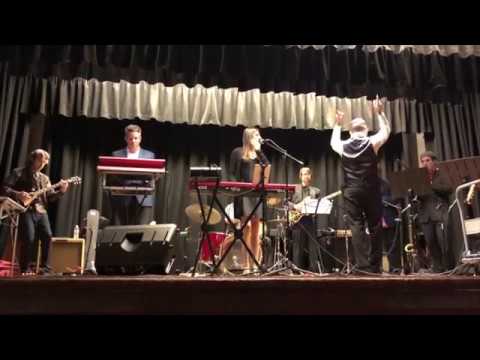
The Red Robot Show and Vacuum Tree Head are back! This time Jason Berry brings footage from our March show at HSP2017, and is joined by Marlon Brando in this full-length episode.

The members of the band for this performance are:

Jason Bellenkes : Alto Saxophone and Clarinet
Jason Berry: Conductor
Amanda Chaudhary: Keyboards and Vocoder
Richard Corny: Electric Guitar
Michael de la Cuesta: Guitar, Synth, Vibraphone, Sitar, etc.
Richard Lesnik: Bass Clarinet
Justin Markovits: Drum Kit
Joshua Marshall: Soprano and Tenor Saxophones
John Shiurba: Bass Guitar

Video credits:
Cameras by Amanda Chaudhary and Jason Berry
Edited by Berry / Chaudhary
Audio Engineering by Amanda Chaudhary
Animated and Directed by Jason Berry

Special Thanks:
Mika Pontecorvo
Mark Pino

Brought to you by White Wine. Crisp. And Refreshing.