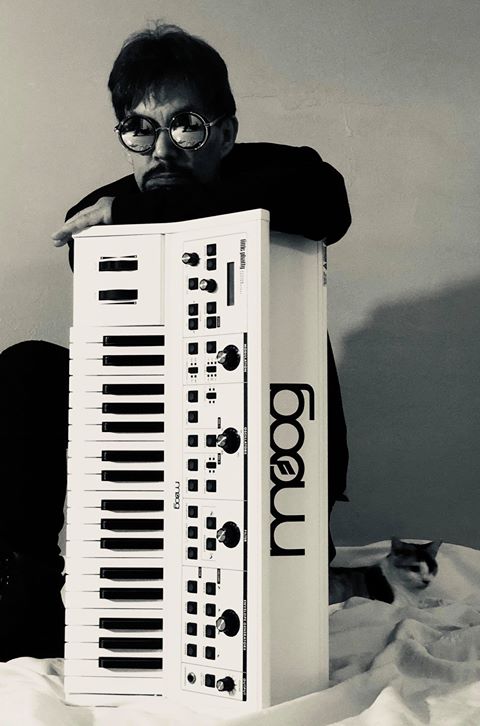
CatSynth Pics: Synergy Cat

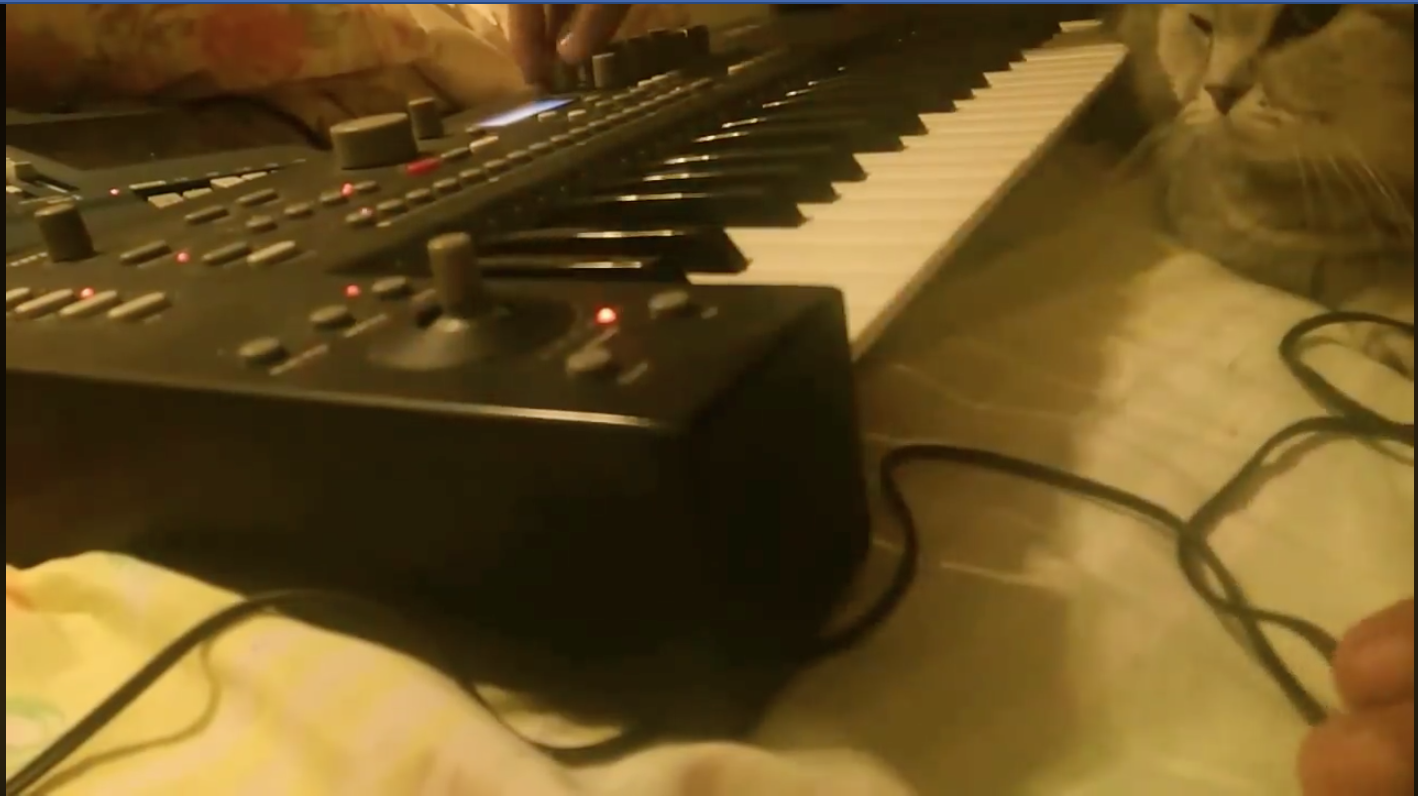
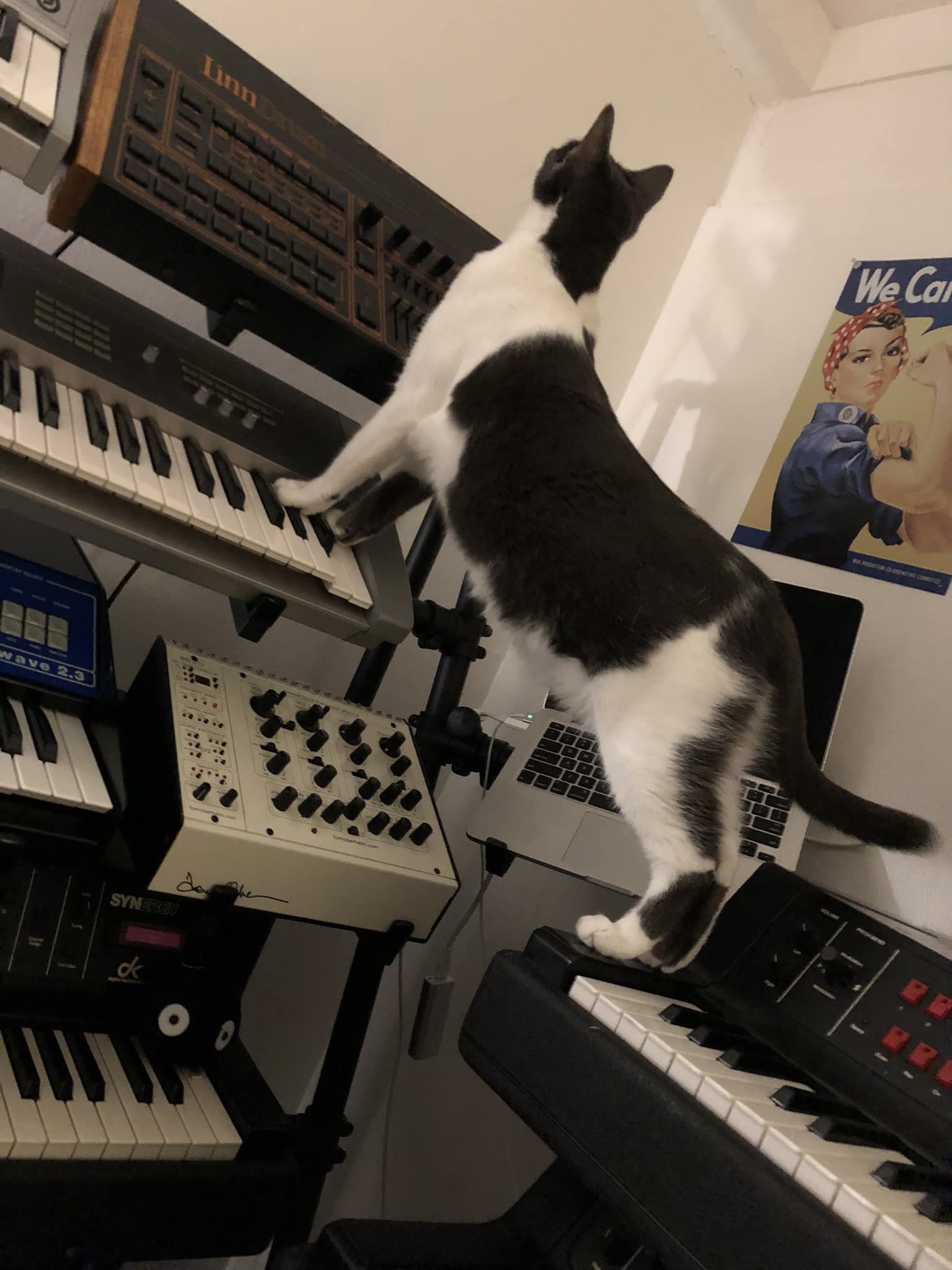
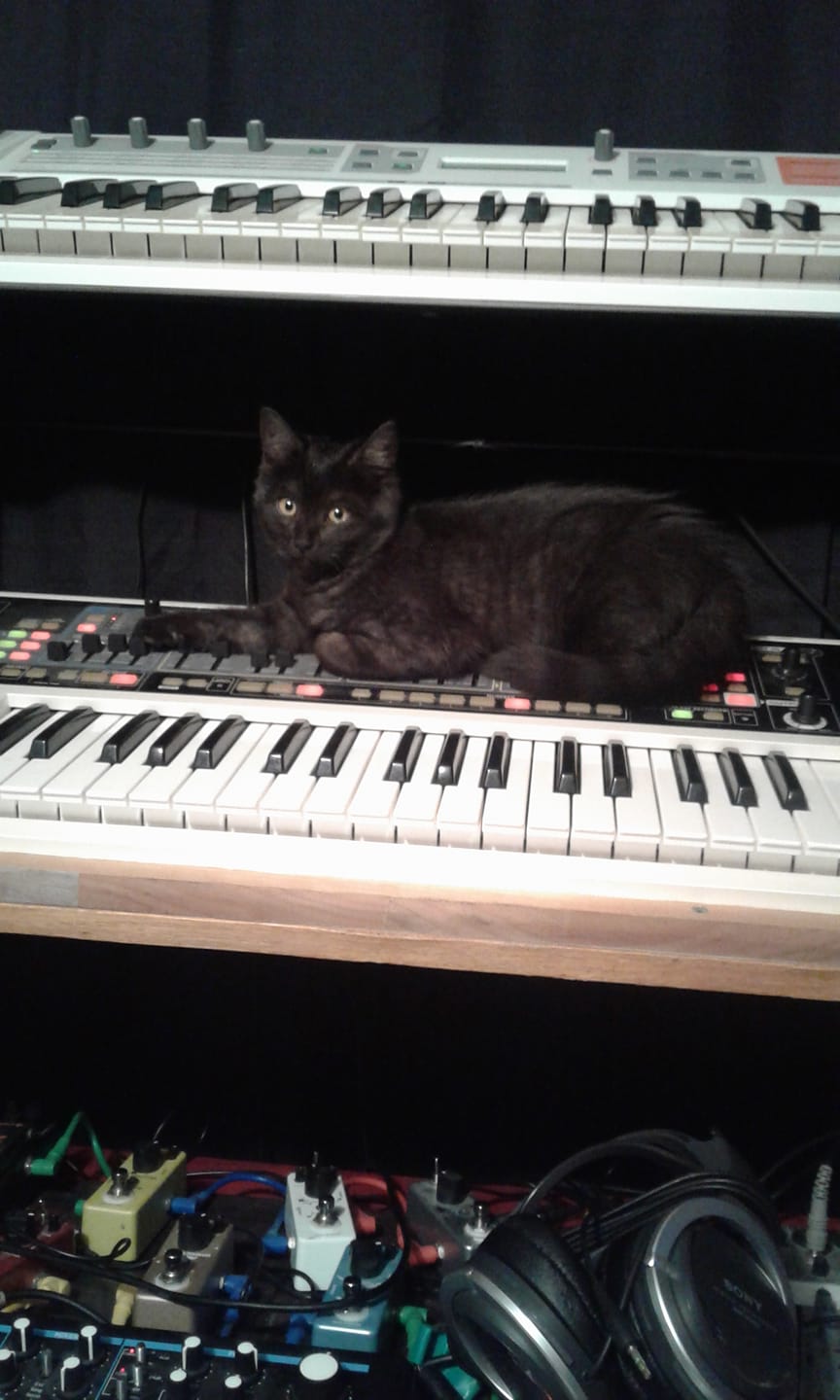
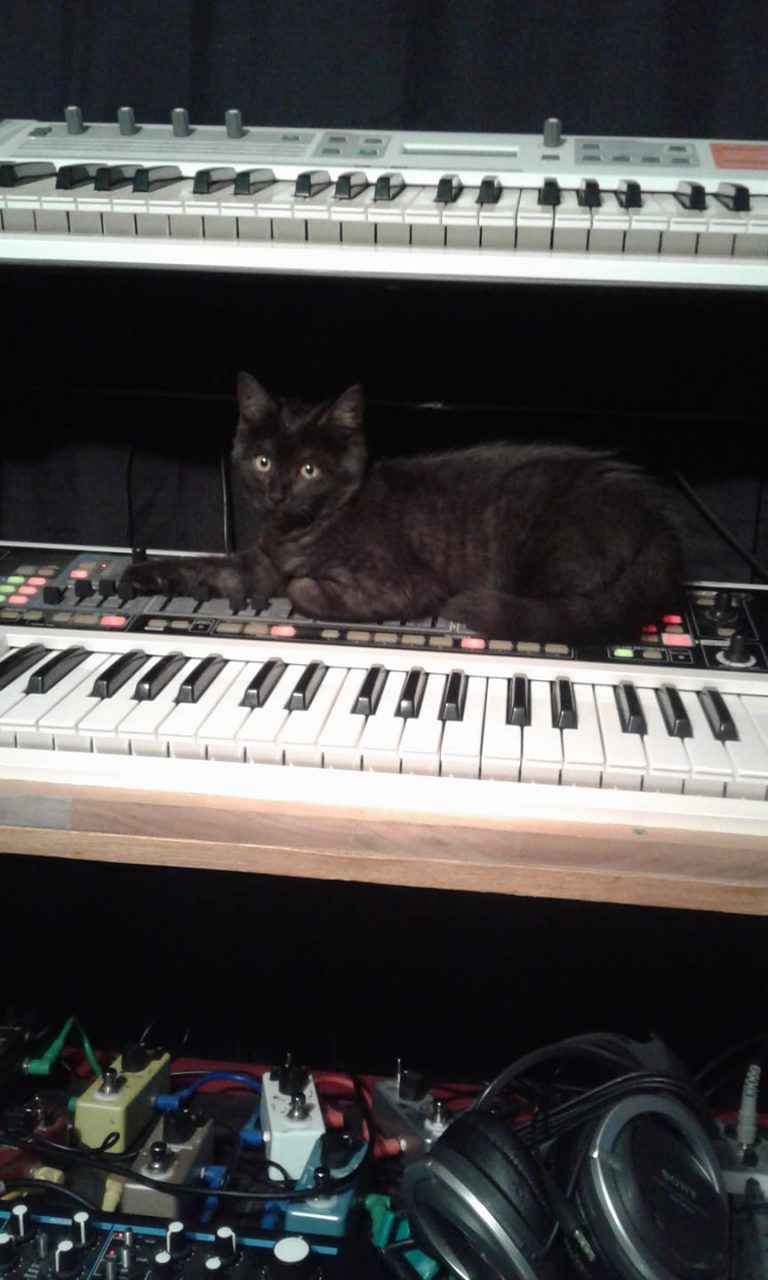
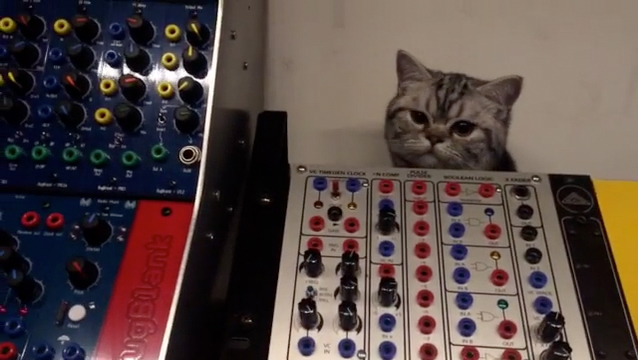
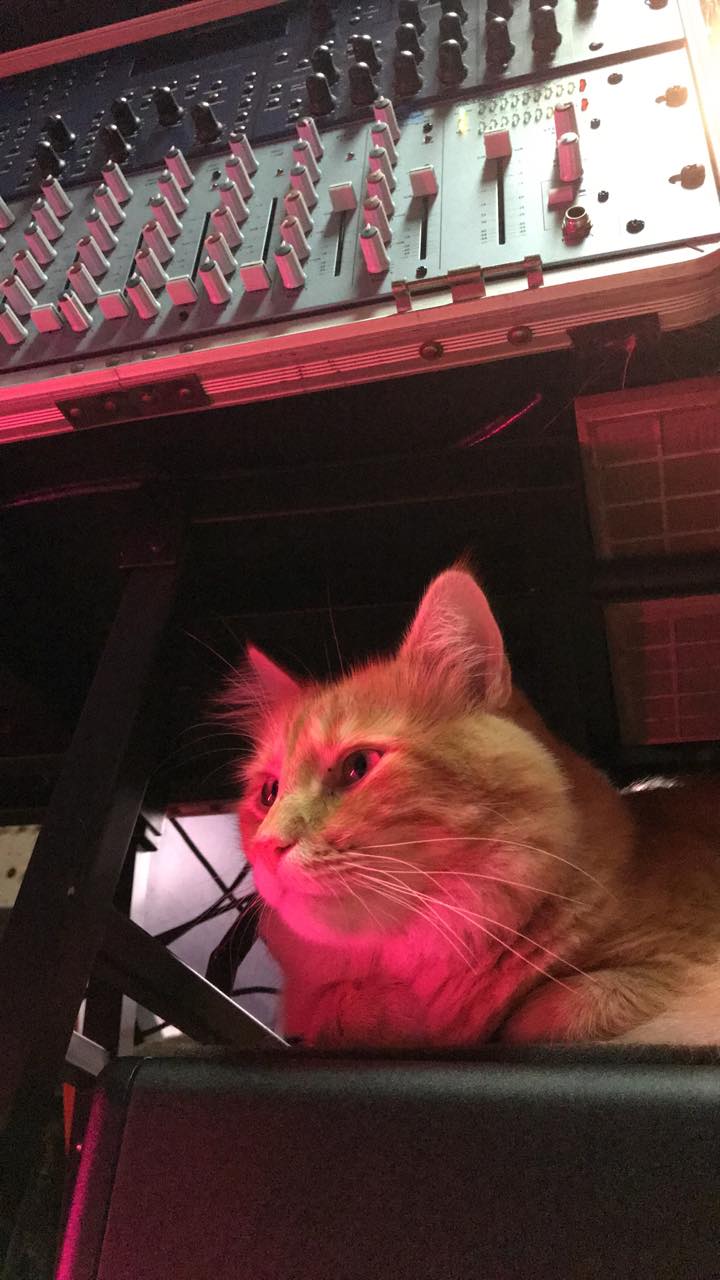
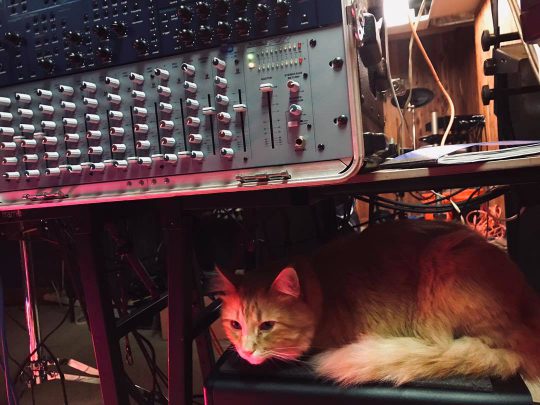
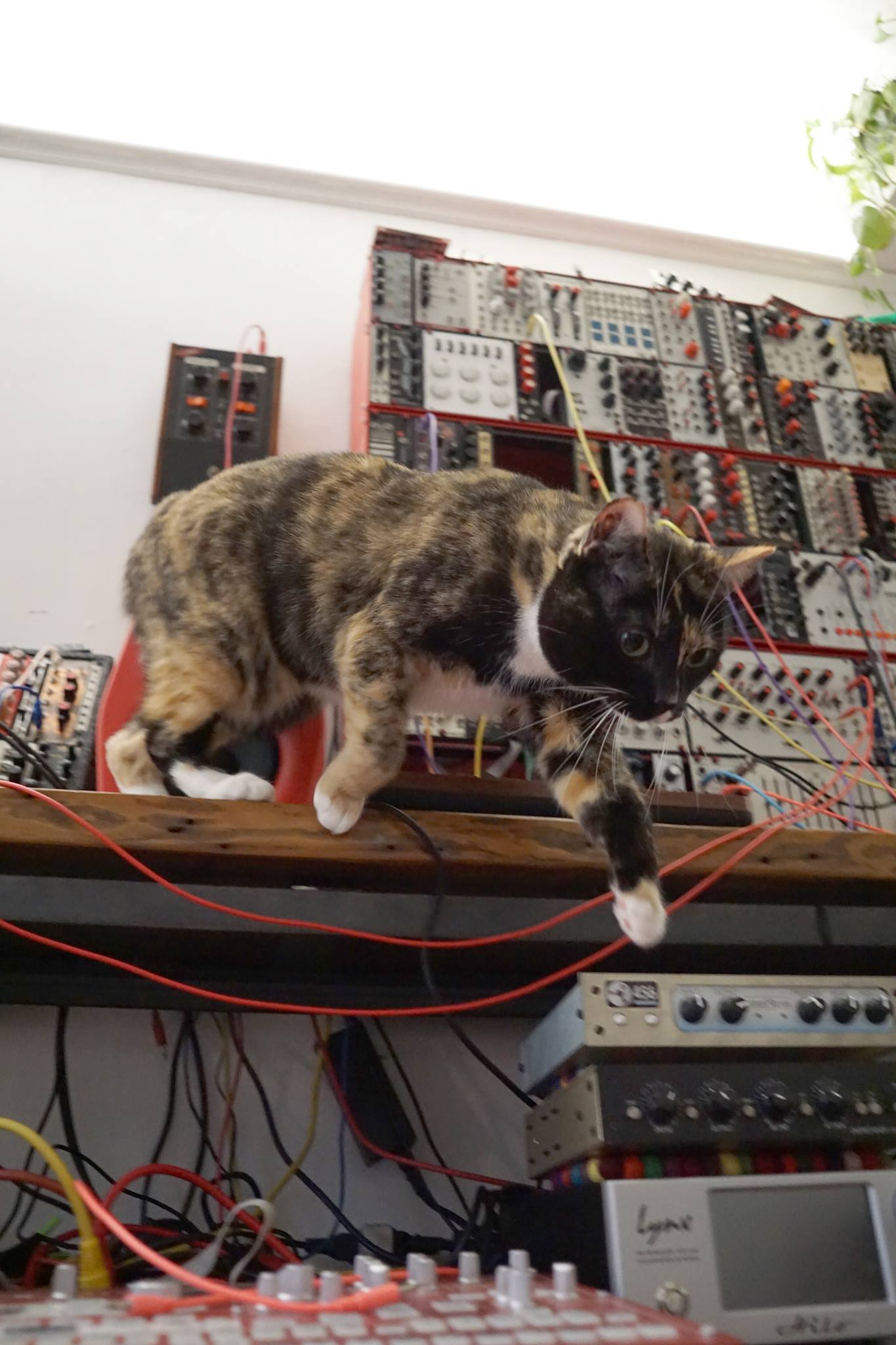
Gracie returns.  This time with not one but two of the rare Synergy synthesizer from Digital Keyboards.  Submitted by our friend Alsún Ní Chasaide via Facebook.

Gracie is absolutely adorable with her poses on the synth 😻.  But she has also chosen a very interesting instrument.  The Synergy is a hardware additive synthesizer with 32 digital oscillators and various modulation sources.  Additive synthesis requires a lot of resources in hardware (i.e., compared to FM), and the Synergy carried a hefty price tag.  There aren’t that many of them in operation today, so it’s quite amazing to see two of them in the same place at once.

From Vintage Synth Explorer:

The Synergy is a digital additive synthesizer manufactured from 1982 to 1985. Of the approximately 700 to 800 that were produced, it is estimated that less than 100 may still be in operation today. In the 1970’s, Bell Laboratories developed a high-speed additive oscillator system which was used by Digital Keyboards, a US-based division of the Italian synth/organ maker Crumar, to create a sophisticated additive synthesizer known as the Crumar General Development System (GDS). The GDS originally sold for about $27,500. The Synergy was essentially a lower-cost version of the GDS, without all the programmability of the GDS, and a price tag closer to $5,300…

…Although the Synergy is not programmable, it does feature 24 tone presets (with many more available via 24-tone cartridges). The sounds are generated by additive synthesis and phase modulation using 32 digital oscillators, computer controlled, and allocated dynamically. Polyphony is variable, depending on the selected tone preset.

You can see some of Gracie’s previous appearances via this link.

The Making of Lake Merced

Today we talk about Lake Merced, as well as the recent video we made featuring it.

Lake Merced is located in the southwestern corner of San Francisco, in the vicinity of the SF Zoo and SF State University.

Lake Merced in San Francisco

Despite its odd shape and the fact that it borders three golf courses, it is actually a natural lake.  It is fed primarily by an underground spring.  In the 19th century, the lake briefly had an outlet to the ocean, approximately where the Great Highway breaks off from Skyline Boulevard, just south of the zoo.  The outlet is long gone, but the lake’s ecosystem retains some of its saltwater heritage among the fish and other wildlife that inhabit it. Lake Merced and its surrounding park remain one of the last and largest natural spaces left in the city (in spite of the golf courses), and is home to a variety of plant and animal life.  On the day I visited to shoot video, I encountered this egret.

But it is definitely an urban natural space, with sounds and sights from the surrounding city mixing with nature.  I am particularly fond of this view looking east over the lake to some apartment buildings.  It brings to mind Flushing Meadows in the New York City borough of Queens.

I have been spending more time in the western neighborhoods of San Francisco of late, and Lake Merced is one of the spots I revisit.  This is what inspired me to make it the subject of a CatSynth TV video, complete with original synthesizer music.

Here is see the final post-production on the video in Pro Tools.  Front and center is Tracktion’s BioTek software synthesizer, which I reviewed during NAMM 2016.  It was among the primary instruments used in this video where I blended its mix of natural and traditional-synthesizer sounds with the sounds of the field video.

I also made extensive use of the 4ms Spectral Multiband Resonator and Epoch Modular Benjolin (designed by Rob Hordjik).  They both have very elemental sounds that resemble air and water.  The Benjolin is chaotic by design, and a small turn of a knob can change it from liquidy to screeching, so it’s sometimes a challenge to get a good recording that fits the concept of the music.  The SMR is a lot of fun to play, especially using alternate tunings and changing the spread and morph parameters.  A clock is used to constantly shift the bands.


Rounding out the sound palette were the Arturia MiniBrute 2Mimimoog Model D, and Metasonix R53 vacuum-tube waveshaper and ring modulator.

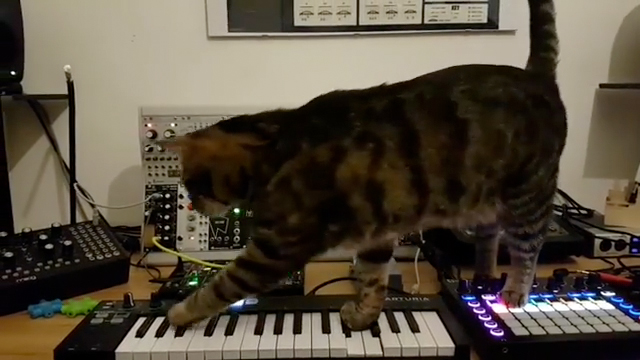
The Moog Model D, the MiniBrute and several of the modules make cameos during the video, as does Sam Sam.  Watch the video all the way through to spot her 😺

This was a fun video to shoot and put together, something a bit more creative and abstract than our usual demos or live-show reports.  I have more of these waiting in the queue to be made…


CatSynth Pic: Eli and Yamaha Reface DX

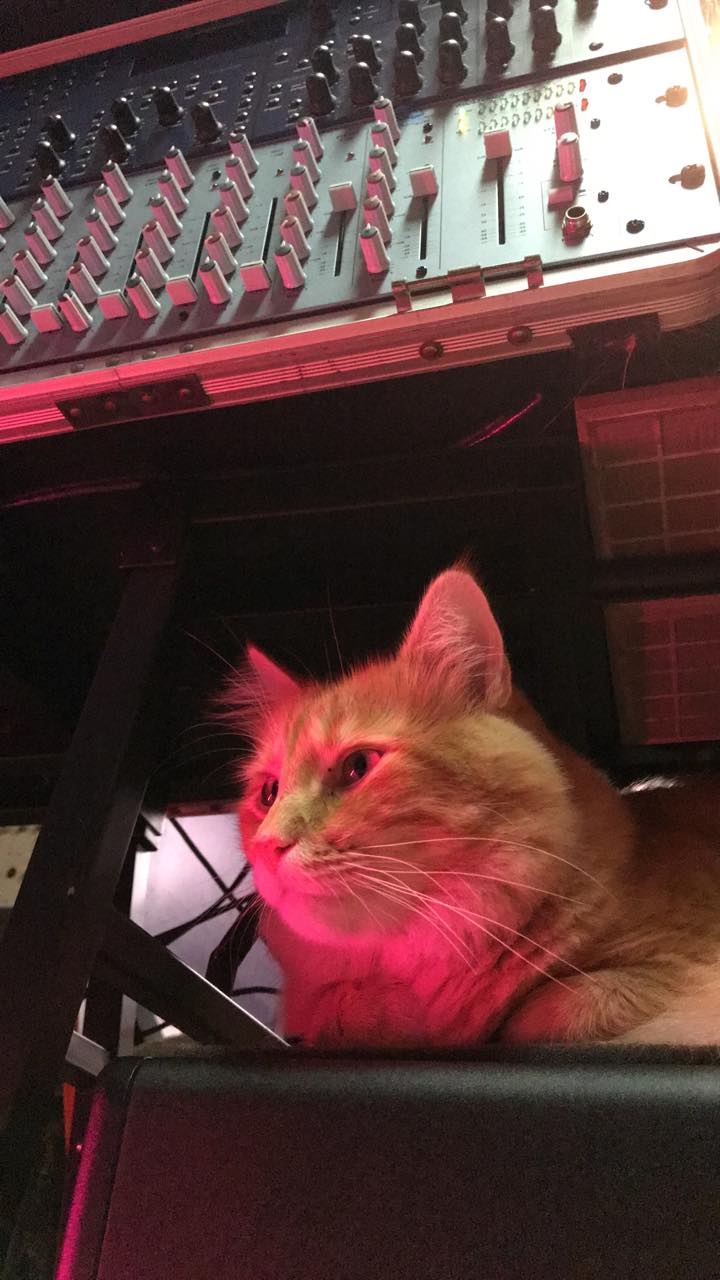
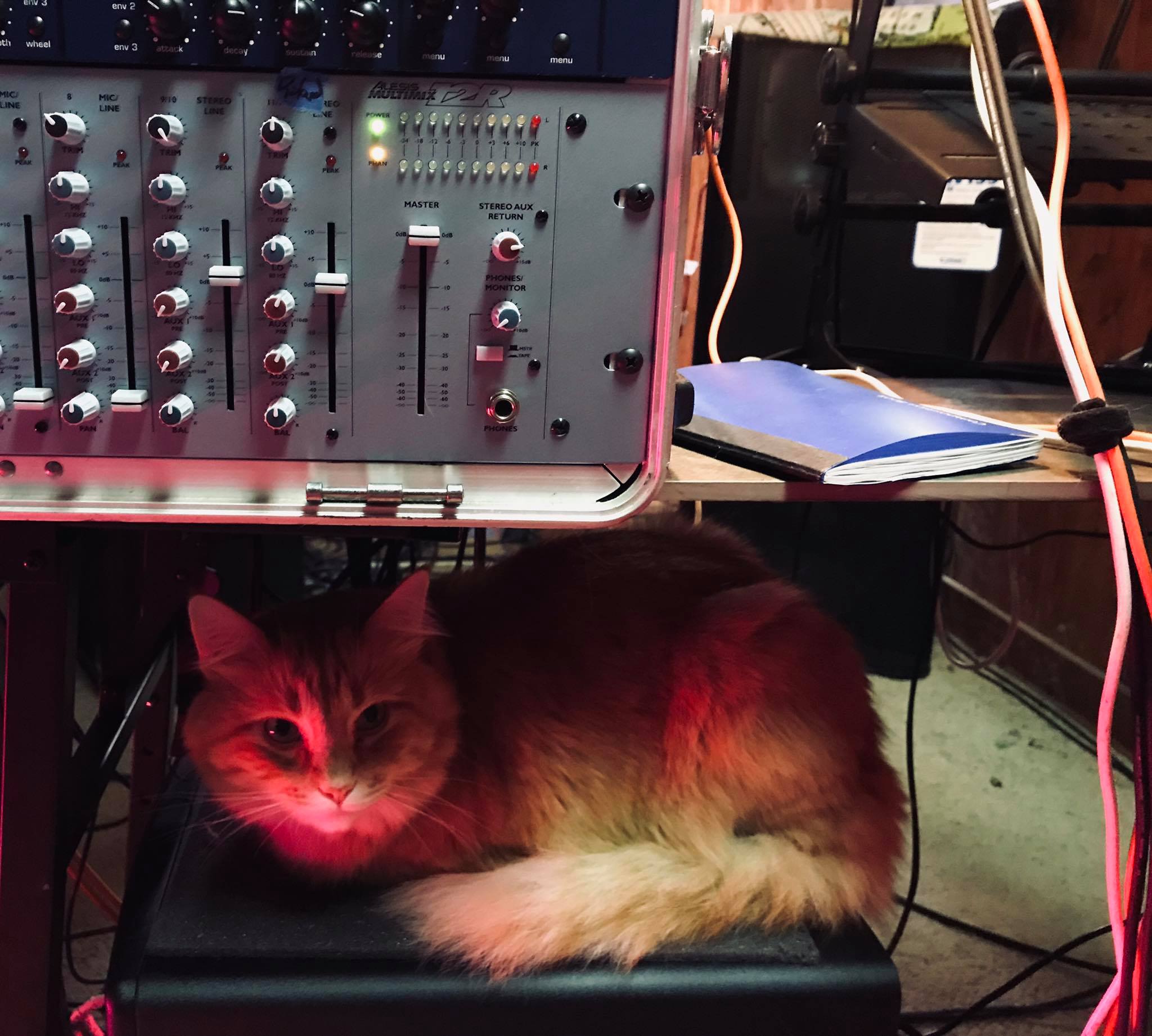
Handsome tabby Eli poses with a Yamaha Reface DX synthesizer. Submitted by Elias Laughton via our Facebook page.

Like Sam Sam and Luna, Eli was a shelter cat.  We always love hearing about shelter cats finding their forever homes.  If you are looking for a new feline addition to the family, please do consider adopting a rescue!

The Yamaha Reface DX is a reissue of the DX line from the 1980s, specifically, the 4-operator models like the DX27 or TX81Z.  It lacks some of the TX81Z’s features like alternate operator waveforms but adds some new elements like continuing feedback and each operator.  You can read more about it at Yamaha’s official page.


UnPopular Electronics (Robair + Djll), Lx Rudis, Franck Martin at Robotspeak

It’s been a little while since we last attended Church of Thee Super Serge at Robotspeak in San Francisco, but we made a point of going this past weekend.  For those who have not been there or read our past reviews, it’s an almost-ever-month show on a Saturday afternoon with live hardware-synthesizer performances.  As the name suggests, some acts do include Serge synthesizers, but it is not required, and a wide variety of instruments are used.  All three sets are featured in our most recent CatSynth TV episode.

The first set featured Lx Rudis performing on an Oberheim Xpander, a somewhat underappreciated instrument from the 1980s.

Lx Rudis on Oberheim Xpander

At its heart, the Xpander is a 6 voice analog synthesizer, but with a complex array of digital controls that can be programmed and applied independently to each voice.  Lx Rudis took full advantage of these, especially the LFOs and lag generators, to create subtle and minimal metric patterns.  He constantly moved voices in and out, configuring them on the fly, in a way that was very expressive and musical.  I particularly liked the sections which had staccato rhythmic textures against slowly moving timbres deliberately out of sync with one another.

Next up was Franck Martin, who performed a solo set on a modular synthesizer with several standalone instruments.

Franck Martin

Martin’s setup included a Moog Subharmonicon, which he built while attending Moogfest this year (we at CatSynth are a bit envious), as well as a DFAM (Drummer From Another Mother).  There were also additional voices provided by Braids and Plaits modules from Mutable Instruments that he could bring in and out using a touch-plate interface.  The result was a slowly changing beat pattern with an eerie inharmonic voicing and gentle undulation.

The final set featured our friends Gino Robair and Tom Djll teaming up as the brilliantly named Unpopular Electronics.

They had a wide variety of gear, including Serge panels in addition to Eurorack modules and standalone instruments from Bugbrand and others.  In addition, Gino had an interesting small case that included touchpads.

The music was frenetic and intense, an avalanche of pops and hits and loud cloudlike tone clusters.  And there were trumpet sounds entering into the mix at various points.  But there was an exquisite detail to the madness with changes among the different instruments and sounds, and musical pauses and rests before the pair dived back into the frenzy.  There were also many moments of humor and not just Djll’s book about why there aren’t any Zeppelin-style airships in the United States.

In between sets, it’s fun to browse around Robotspeak and see what’s for sale, or on display in the big glass case.

It’s also quite dangerous, as I am often tempted to leave with another module or instrument.  On this occasion, I exercised restraint, but probably not next time…